
Prosthetic Dentistry
Complete Denture
What Are Complete Dentures? Full Denture Treatment in Üsküdar. Comprehensive information about Complete Denture, treatment steps and FAQs — Dentsmile.
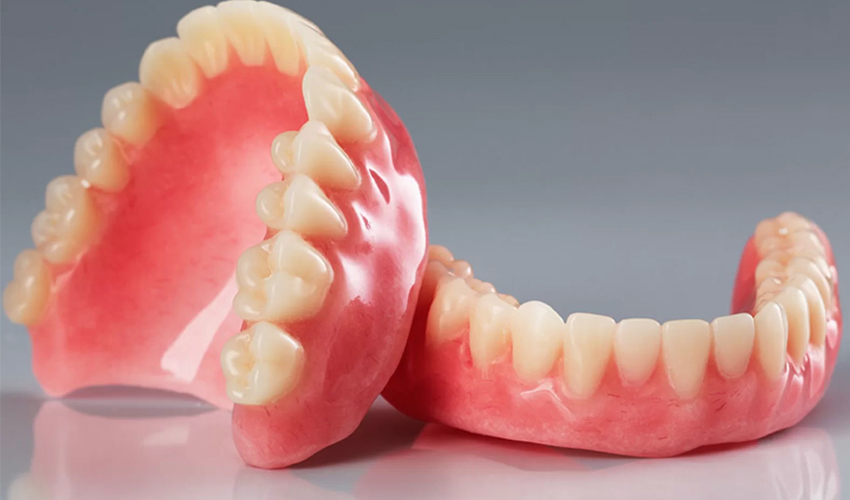
A complete denture (full denture) is a removable dental prosthesis used when all natural teeth in the upper or lower jaw have been lost. It is also commonly known as a full removable denture or false teeth.
The loss of all teeth affects more than just appearance. It may also reduce chewing efficiency, make the pronunciation of certain sounds more difficult, and result in loss of support for the lips and cheeks. The aim of complete denture treatment is not only to replace missing teeth but also to restore chewing function, speech, and facial support as much as possible.
At Dentsmile Oral and Dental Health Clinic, when planning complete denture treatment in Üsküdar, we evaluate the structure of the jawbone, condition of the oral mucosa, relationship between the upper and lower jaws, movements of the tongue and cheeks, and whether the patient has previously used dentures.
Particularly in patients who have been without teeth for many years, loss of jawbone volume can directly affect denture retention. For this reason, each patient’s denture should be planned according to their individual oral anatomy.
When Are Complete Dentures Used?
Complete dentures are used when all natural teeth in one jaw have been lost. A patient may be completely edentulous in only the upper jaw, only the lower jaw, or both jaws.
If natural teeth that can be preserved are still present, extracting them solely for the purpose of providing a complete denture is not an appropriate approach. The health of the existing teeth and whether they can be successfully treated and preserved should first be evaluated.
For patients who have lost all their teeth, treatment options are not limited to conventional complete dentures. Implant-supported removable or fixed prosthetic options may also be considered in patients with suitable bone anatomy and general health.
For this reason, complete denture planning should take into account both the patient’s existing anatomical conditions and their expectations.
Upper and Lower Complete Dentures
Although complete dentures for the upper and lower jaws are based on the same fundamental principles, their behavior within the mouth can differ considerably.
Upper Complete Dentures
When no natural teeth remain in the upper jaw, the denture can obtain support from the edentulous jawbone and oral mucosa as well as the palate.
Proper adaptation of the denture to the oral tissues and appropriate extension of the denture borders are important for retention.
Because a relatively large supporting surface can be used in the upper jaw, many patients may achieve more favorable retention with an upper complete denture than with a lower complete denture.
However, advanced bone loss, dry mouth, or anatomical differences may negatively affect retention.
Lower Complete Dentures
The anatomical conditions affecting a lower complete denture are different.
The tongue, cheeks, and floor of the mouth are constantly moving. In addition, the surface area available to support a lower denture is more limited than in the upper jaw.
Particularly in patients who have been without teeth for many years, significant loss of lower jawbone volume can reduce denture stability. For this reason, some patients may use their upper complete denture comfortably while experiencing movement of the lower denture.
The successful use of a lower complete denture depends not only on the shape of the prosthesis but also on the anatomy of the jawbone, position of the tongue, muscle movements, and the patient’s adaptation to the denture.
In suitable patients where a conventional lower complete denture cannot provide adequate retention, implant-supported prosthetic options may be considered.
How Are Complete Dentures Made?
Complete denture treatment involves more than simply taking an impression of the mouth and placing artificial teeth. Several anatomical and functional factors must be evaluated to ensure that the denture can be used effectively in daily life.
At the beginning of treatment, the soft tissues and jawbones are examined. If the patient has previously used a denture, the fit, bite relationship, and any problems associated with the existing prosthesis are also evaluated.
The necessary impressions are then taken to obtain records of the jaws.
During treatment, the following factors are evaluated together:
Relationship between the upper and lower jaws
Vertical dimension of occlusion
Position of the artificial teeth
Size and shape of the teeth
Tooth color
Lip and cheek support
Smile line
Speech and phonetics
Particularly in patients who have been without teeth for a long period, support in the lower part of the face may have changed over time. Because the position of the teeth and the vertical dimension of the bite can also influence facial appearance, this stage should be planned carefully.
During the tooth try-in stage, the patient and dentist evaluate aesthetics, speech, and the bite together. Once the necessary adjustments have been completed, the denture is finalized and delivered to the patient.
Complete Denture Retention and Adaptation
One of the most important considerations with complete dentures is retention and stability within the mouth.
Conventional complete dentures are not attached to natural teeth or implants. Instead, they obtain their support from the oral soft tissues and jawbone. For this reason, denture retention varies from patient to patient.
Factors that can influence retention include:
Shape and volume of the jawbone
Size of the denture-supporting surface
Characteristics of the oral mucosa
Amount and properties of saliva
Movements of the tongue and cheeks
Adaptation of the denture to the oral tissues
A certain adaptation period is normal for patients beginning to use new complete dentures. During the first few days, patients may experience a feeling of fullness in the mouth, increased saliva production, temporary changes in speech, and difficulty chewing.
When eating, it may be helpful initially to take smaller bites and begin with softer foods. Using both the right and left sides as evenly as possible during chewing can help reduce denture movement.
If the denture causes pressure or sore areas within the mouth, patients should not attempt to file or adjust the denture themselves. Pressure points should be identified by the dentist, who can then make the necessary corrections.
Advantages and Limitations of Complete Dentures
Complete dentures are an important treatment option that can replace all missing teeth in patients who have lost their natural teeth without requiring a surgical procedure.
A properly planned complete denture can help:
Restore chewing function
Support speech
Replace missing teeth aesthetically
Restore support to the lips and cheeks
Help the patient feel more comfortable in social situations
However, it is not realistic to expect a complete denture to provide exactly the same chewing efficiency or sensation as natural teeth.
Particularly in patients with advanced jawbone resorption, the denture may move within the mouth. This can be more noticeable with lower complete dentures.
Changes in the jawbone also do not stop once a denture has been made. The oral tissues may continue to change over time while the shape of the denture remains the same. As a result, a denture that initially fits well may gradually become loose.
Complete Denture Care and Regular Check-Ups
Complete dentures should be cleaned every day. Food debris and microbial plaque accumulating on the denture can negatively affect both the denture surface and the oral tissues beneath it.
The denture should be removed from the mouth and cleaned with an appropriate denture brush. Cleaning products specifically developed for dentures may also be used when necessary.
Uncontrolled use of abrasive cleaning products can scratch the denture surface and make plaque accumulation easier.
Complete dentures are generally recommended to be removed at night. This allows the oral tissues covered by the denture during the day to rest. However, the dentist may provide different instructions in specific situations, such as during the initial period of wearing a new denture.
The absence of natural teeth does not mean that oral hygiene is no longer necessary. The tongue, palate, and other soft tissues within the mouth should also be cleaned regularly.
Completely edentulous patients should continue to attend regular dental check-ups. During these appointments, not only the condition of the denture but also the oral soft tissues should be examined.
When Should Complete Dentures Be Replaced?
It is not appropriate to state that complete dentures must always be replaced after a specific number of years.
The determining factor is not simply the age of the denture. Its fit with the oral tissues should also be evaluated.
Changes in the jawbone over time may result in:
Increased denture movement
More food accumulating beneath the denture
Changes in chewing balance
Pressure sores in certain areas
Changes in facial and lip support
Changes in the bite relationship between the upper and lower dentures
When these problems occur, the existing denture may need to be relined or adjusted, or a new denture may need to be prepared.
The fact that a denture has not fractured despite being used for many years does not necessarily mean that it still fits the oral tissues appropriately.
Complete Dentures and Implant-Supported Dentures
For patients in whom conventional complete dentures cannot provide adequate retention, using dental implants for additional support can be an important treatment option.
Particularly in suitable patients with advanced bone loss in the lower jaw who experience persistent movement of their dentures, a certain number of implants may be placed so that the removable denture can obtain retention from these implants.
With these systems, the denture can still be removed by the patient for cleaning, but its movement within the mouth may be more controlled than with a conventional complete denture.
In some patients with suitable bone and oral conditions, implants may also be used to support fixed prosthetic restorations.
When choosing between conventional complete dentures, implant-supported removable dentures, and implant-supported fixed prostheses, factors such as available bone volume, general health, oral hygiene, patient expectations, and the long-term maintenance requirements of treatment should all be evaluated together.
Complete Denture Treatment in Üsküdar
At Dentsmile Oral and Dental Health Clinic, when planning complete denture treatment in Üsküdar, our objective is not simply to place artificial teeth where natural teeth have been lost. We evaluate the overall function of the prosthesis within the mouth.
Particularly in completely edentulous patients, the existing jawbone anatomy, oral mucosa, bite relationship, lip support, speech, and anatomical factors affecting denture retention are important components of treatment planning.
When adequate stability cannot be achieved with a conventional full denture, implant-supported removable or fixed prosthetic options may also be considered when the clinical conditions are suitable.
Our approach to complete dentures in Üsküdar is to provide a prosthesis suited to the patient’s existing oral anatomy, support chewing and speech functions, achieve harmony with the face, and allow the patient to use the denture as comfortably as possible in daily life.