Orthodontics
Clear Aligner Treatment
Comprehensive information about Clear Aligner Treatment, treatment steps and FAQs — Dentsmile.
What Is Clear Aligner Treatment? Straightening Teeth with Braceless Orthodontics
Clear aligner treatment is a modern orthodontic method designed to correct dental crowding, spacing, and certain bite problems using custom-made removable aligners.
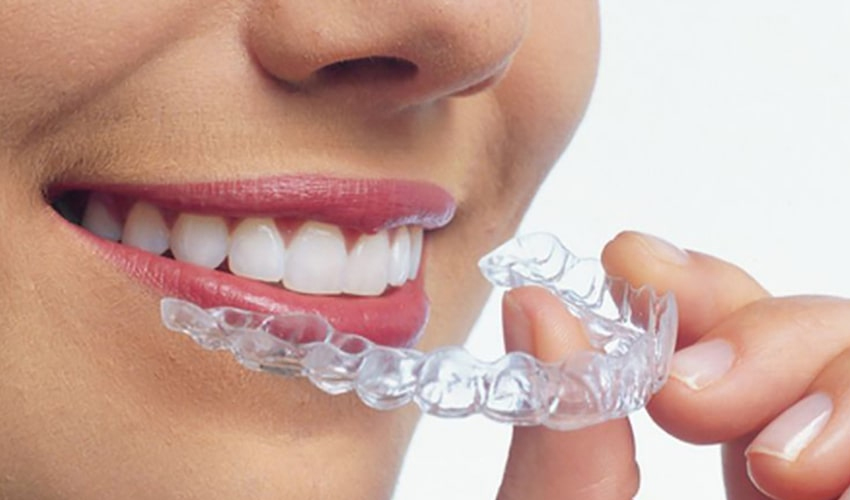
Instead of conventional metal brackets, this treatment uses transparent aligners that fit over the teeth and are less noticeable from the outside. Each aligner is designed to move the teeth gradually and in a controlled manner toward their planned positions, with the patient progressing to a new aligner at specified intervals.
The discreet appearance of clear aligners is an important advantage. However, treatment success does not depend simply on the aligners being transparent. Appropriate case selection, biomechanical planning, sufficient daily wear, and regular clinical monitoring are at least as important as the aligner system itself.
At Dentsmile Clinic – Üsküdar, Istanbul, we do not consider clear aligner treatment merely an aesthetic procedure for straightening the front teeth. We plan it as an orthodontic treatment that also takes the bite and long-term stability into account.
What Is Clear Aligner Treatment?
Clear aligner treatment begins with a digital scan of the patient’s teeth, allowing their current positions to be recorded in three dimensions.
The intended final positions of the teeth are then planned digitally.
Based on this plan, a sequential series of custom-made clear aligners is produced.
Each aligner applies small, controlled forces to the teeth. Once the planned amount of movement has occurred, the patient progresses to the next aligner.
This process continues until the active treatment is completed.
How Do Clear Aligners Move Teeth?
Orthodontic tooth movement is not simply a mechanical process in which aligners “push” the teeth.
When controlled force is applied to a tooth, biological changes occur within the periodontal ligament and surrounding bone. Bone remodeling takes place on one side of the tooth while new bone formation occurs on the other.
For this reason, moving teeth safely requires time.
Trying to move teeth as quickly as possible does not necessarily mean better treatment.
The fundamental objective in orthodontics is to achieve controlled and predictable tooth movement within biological limits.
What Can Clear Aligners Treat?
Clear aligners can now be used for a wide range of orthodontic problems.
In appropriately selected cases, they may be used to treat:
Mild to moderate dental crowding
Spaces between teeth
Irregularities of the front teeth
Certain deep bite cases
Certain open bite problems
Certain crossbites
Teeth that have shifted after previous orthodontic treatment
Orthodontic corrections performed for aesthetic purposes
However, not every orthodontic problem can be corrected with the same degree of predictability using aligners alone.
Who Is Suitable for Clear Aligner Treatment?
Clear aligners may be particularly suitable for adolescents and adults who:
Do not want the appearance of conventional braces
Have aesthetic concerns during orthodontic treatment
Can wear their aligners consistently
Maintain good oral hygiene
Have a dental and jaw problem suitable for aligner treatment
Clear aligner systems may also be used in appropriately selected children and adolescents.
However, in growing patients, jaw development and the eruption status of the permanent teeth should also be evaluated.
Who May Not Be Suitable for Clear Aligners?
It is not appropriate to recommend clear aligners to every patient solely because of their aesthetic advantages.
Treatment planning may be affected by:
Significant skeletal jaw discrepancies
Highly complex tooth movements
Advanced periodontal disease
Uncontrolled gum disease or bone loss
Inability to comply with the required aligner wear
In some cases, fixed braces, additional orthodontic appliances, or combined surgical-orthodontic treatment may be more appropriate.
How Is Clear Aligner Treatment Performed?
1. Orthodontic Examination
The initial assessment includes evaluation of:
Tooth alignment
Relationship between the upper and lower jaws
Bite
Gum health
Jaw joints
Facial and profile relationships
Planning treatment solely on the basis of visible crowding in the front teeth is not sufficient.
2. Digital Intraoral Scanning
A digital intraoral scan of the teeth is obtained.
This creates a three-dimensional model of the patient’s dentition.
Compared with conventional impression techniques, digital scanning can provide a:
More comfortable
Faster
Directly transferable method for digital treatment planning
3. Photographic and Radiographic Assessment
When clinically indicated, the pretreatment assessment may include:
Intraoral and facial photographs
Panoramic radiography
Cephalometric radiography
Additional imaging may be required in cases involving impacted teeth or specific anatomical considerations.
4. Digital Treatment Planning
The current positions of the teeth are analyzed digitally.
The treatment plan determines:
How far each tooth needs to move
In which direction it should move
In what sequence the movements should occur
Digital systems can also provide a simulation of the intended tooth alignment at the end of treatment.
However, the image displayed on the screen should not be interpreted as a guaranteed final result.
It represents a treatment plan. Biological response, patient compliance, and the clinical course can all influence the final outcome.
5. Production of the Clear Aligners
A personalized series of aligners is produced according to the treatment plan.
Each aligner differs slightly from the previous one and is designed to guide the teeth toward the next planned position.
6. Wearing the Aligners
Each aligner is worn for the period recommended by the treating dentist or orthodontist.
Aligners are generally removed when:
Eating
Drinking hot beverages
Brushing and cleaning the teeth
For the remainder of the day, they should remain in the mouth as consistently as possible.
7. Regular Follow-Up
Throughout treatment, tooth movement is monitored to determine whether it is progressing according to plan.
If necessary, a new digital scan may be obtained and the treatment plan adjusted.
How Many Hours a Day Should Clear Aligners Be Worn?
The success of clear aligner treatment is directly related to patient compliance.
Most treatment protocols require aligners to be worn for approximately 20–22 hours per day.
They are generally removed only for:
Eating
Brushing the teeth
Flossing and interdental cleaning
Frequently removing the aligners or leaving them out for extended periods can prevent the teeth from moving as planned.
Removability is one of the major advantages of clear aligners, but it also places an important responsibility on the patient.
How Often Are Clear Aligners Changed?
The interval between aligner changes depends on the system used, the type of tooth movement, and the individual treatment plan.
Some protocols involve changing aligners approximately once a week, while longer wear periods may be recommended in certain cases.
Changing to the next aligner earlier than instructed does not accelerate treatment.
The appropriate time to progress to the next aligner should be determined according to the orthodontic treatment plan.
What Are Attachments in Clear Aligner Treatment?
Some patients undergoing clear aligner treatment may notice small tooth-colored projections attached to certain teeth.
These are known as attachments.
Attachments are made from composite material and help the aligners apply more effective forces to specific teeth.
Different attachment designs may be used to:
Rotate a tooth
Move a tooth in a particular direction
Improve control of the tooth root
Not every patient or every tooth requires an attachment.
Are Teeth Filed During Clear Aligner Treatment?
In certain cases, a very small amount of enamel may be removed from the contact surfaces between neighboring teeth to create the space required for alignment.
This procedure is called IPR – interproximal reduction.
IPR is performed in a controlled and limited manner.
The aim is not to significantly reduce the size of the teeth but to create the small amount of space needed to correct crowding.
IPR is not required in every clear aligner case.
Are Teeth Extracted During Clear Aligner Treatment?
Not in every case.
However, orthodontic treatment involving extractions may be considered when there is significant space deficiency or certain bite and facial profile problems.
Using clear aligners does not automatically mean that treatment will be extraction-free.
The decision is based on factors such as:
Severity of crowding
Jaw structure
Tooth inclination
Facial profile
Lip support
Bite relationships
Are Clear Aligners Better Than Braces?
There is no single answer that applies to every patient.
Successful orthodontic treatment can be performed with either system.
Advantages of Clear Aligners
Less noticeable appearance
Removable during meals
Easier tooth cleaning
Digital treatment planning
Potentially less irritation to the cheeks and lips because there are no conventional brackets or wires
Advantages of Fixed Braces
Cannot be removed by the patient
Treatment does not depend on daily wear-time compliance
May provide more predictable clinical control for certain complex movements
Can be used for a very broad range of orthodontic problems
For us, the correct choice is not determined by asking, “Which system is newer?” but rather which system can provide the appropriate tooth movements for that particular patient.
Is Clear Aligner Treatment Painful?
When beginning a new aligner, patients may experience:
Pressure
Tightness
Mild sensitivity
for a few days.
This is an expected response to orthodontic forces being applied to the teeth.
The discomfort generally decreases within a short period.
Severe, persistent, or unusual pain should be clinically evaluated.
Do Clear Aligners Affect Speech?
During the first few days, some patients may notice a slight change in speech while the tongue adapts to the aligners.
The pronunciation of certain sounds may temporarily be affected.
Most patients adapt within a relatively short period, after which speech usually returns close to normal.
Can You Eat While Wearing Clear Aligners?
Generally, no.
Clear aligners should usually be removed during meals.
Eating while wearing aligners may cause:
Deformation of the aligners
Discoloration
Food accumulation between the teeth and aligners
Drinks other than water, particularly hot, sugary, or strongly colored beverages, are also generally not recommended while the aligners are in place.
Hot beverages may affect the aligner material.
Can You Drink Coffee with Clear Aligners?
Drinking coffee while wearing aligners may cause staining.
Hot coffee may also negatively affect the aligner material.
It is therefore generally preferable to remove the aligners before drinking coffee, clean the mouth afterward, and then replace them.
How Should Clear Aligners Be Cleaned?
Clear aligners should be cleaned regularly.
Depending on the aligner material and the dentist’s recommendations, cleaning may involve:
Cool or lukewarm water
Cleaning products recommended by the dentist
Suitable aligner-cleaning products
Very hot water should not be used.
Aggressively brushing certain aligner materials with toothpaste may scratch the surface and make the aligners appear more cloudy or opaque.
Oral hygiene is just as important as cleaning the aligners themselves.
Replacing the aligners without cleaning the teeth can trap food debris and bacteria against the tooth surfaces for extended periods.
Do Clear Aligners Cause Tooth Decay?
Clear aligners do not directly cause tooth decay.
However, in patients with poor oral hygiene, wearing aligners over the teeth for extended periods may create conditions that increase the risk of decay.
In particular, aligners should not be replaced immediately after eating or drinking sugary beverages without first cleaning the teeth appropriately.
Regular brushing and interdental cleaning are essential.
How Long Does Clear Aligner Treatment Take?
Treatment duration depends on the complexity of the case.
Mild crowding may require a relatively short treatment period, while:
Severe crowding
Bite problems
Multiple complex tooth movements
Extraction cases
may require longer treatment.
Treatment duration can be influenced by:
Complexity of the case
Amount of tooth movement required
Patient compliance with aligner wear
Biological response of the teeth
Need for additional aligners
An exact treatment duration therefore cannot be determined reliably without an orthodontic examination and digital treatment planning.
What Are Refinement or Additional Aligners?
When the initial series of aligners has been completed, the teeth may not always reach the exact final positions predicted in the digital plan.
In these cases, a new digital scan may be obtained and additional aligners produced.
Depending on the system, this stage may be referred to as refinement, revision, or additional aligner treatment.
The need for refinement does not necessarily mean that treatment has failed.
Comparing biological tooth movement with the digital plan and making adjustments when necessary is a normal part of orthodontic treatment.
Is a Retainer Required After Clear Aligner Treatment?
Yes.
Once clear aligner treatment has been completed, the teeth still have a tendency to move toward their previous positions.
A retainer is therefore required to help maintain the treatment result.
Retention may involve:
A removable clear retainer
A fixed wire bonded behind the teeth
A combination of both
Using clear aligners during active treatment does not eliminate the need for retention afterward.
Can Teeth Become Crooked Again After Clear Aligner Treatment?
Yes, tooth movement can occur if retainers are not used adequately.
Teeth are not completely static structures throughout life.
For this reason, a long-term retention plan is important after treatment.
The success of orthodontic treatment should be evaluated not only on the day the teeth become straight, but also by how well the result can be maintained over the years.
Can Clear Aligners Be Used to Straighten Only the Front Teeth?
Limited correction of the front teeth may be possible in certain mild cases.
However, focusing exclusively on the appearance of the front teeth is not always appropriate.
When aligning the anterior teeth, it is also important to consider:
Bite of the posterior teeth
Relationship between the upper and lower jaws
Root positions of the teeth
For this reason, an approach based simply on “straightening the six visible front teeth” is not appropriate for every patient.
Are Elastics Used with Clear Aligners?
In some cases, yes.
Orthodontic elastics may be used together with clear aligners to improve the relationship between the upper and lower teeth or jaws.
Special cut-outs or auxiliary components can be incorporated into the aligners to allow elastics to be attached.
The duration and pattern of elastic wear are determined according to the individual treatment plan.
What Are the Advantages of Clear Aligner Treatment?
In suitable cases, clear aligners offer several important advantages:
They are less noticeable during treatment.
They can be removed for meals.
Brushing and flossing are generally easier.
There are no conventional metal brackets and wires.
Detailed digital treatment planning can be performed.
The intended tooth alignment can be evaluated digitally before treatment.
They may attract less attention in professional and social settings.
What Are the Disadvantages of Clear Aligner Treatment?
It is equally important to understand the limitations of the treatment.
Success depends heavily on patient compliance.
Treatment will not progress as planned if the aligners are not worn for sufficient periods.
Additional appliances may be required for certain complex movements.
Attachments mean the treatment is not completely invisible.
Additional aligner series may be required.
Losing or damaging aligners may interrupt treatment.
The fact that aligners are transparent does not automatically make orthodontic treatment easier.
Can Adults Have Clear Aligner Treatment?
Yes.
Clear aligners are particularly popular among adult orthodontic patients.
They can provide an aesthetic alternative for adults who prefer not to wear conventional metal braces because of professional or social considerations.
However, before treatment, adults should also be assessed for:
Gum health
Bone support
Missing teeth
Dental implants
Crowns and bridges
Can Clear Aligners Be Used If I Have Dental Implants?
In suitable situations, yes.
However, dental implants do not move under orthodontic forces in the same way as natural teeth.
The positions of existing implants are therefore treated as fixed references during orthodontic planning.
In some comprehensive cases, it may be more appropriate to place the implant after orthodontic treatment has been completed.
Can Clear Aligners Be Combined with Bonding or Porcelain Veneers?
Yes.
In certain aesthetic cases, moving the teeth into more appropriate positions orthodontically before correcting small shape irregularities with composite bonding or porcelain veneers may provide a more conservative treatment approach.
For example, rather than significantly reducing natural tooth structure to disguise mildly crowded teeth with porcelain restorations, clear aligner treatment may first be used to move the teeth into better positions.
Minimal restorative treatment can then be limited to the teeth that genuinely require it.
This approach can be important for preserving natural tooth structure.
Clear Aligner Treatment Prices
The cost of clear aligner treatment varies according to the complexity and scope of the case.
Factors that may influence treatment cost include:
Severity of crowding
Number of dental arches being treated
Number of aligners required
Treatment duration
Need for additional aligners
Clear aligner system used
Requirement for additional orthodontic appliances
For this reason, determining an exact cost solely according to “how many aligners are needed” or from an intraoral photograph is not appropriate.
An orthodontic examination and digital treatment plan should be completed first.
Clear Aligner Treatment at Dentsmile Clinic
At Dentsmile Clinic – Üsküdar, Istanbul, we perform clear aligner treatment using digital orthodontic planning.
Depending on the individual case, pretreatment assessment may include:
Digital intraoral scanning
Intraoral and facial photographs
Panoramic radiography
Cephalometric assessment
Digital orthodontic analysis
to evaluate the relationship between the teeth and jaws.
One of the points patients most frequently focus on is how visible the aligners will be during treatment. For us, however, the more important question is: Are the planned tooth movements biologically and functionally appropriate?
Transparency is the aesthetic advantage of clear aligners. The elements that ultimately determine the success of orthodontic treatment are accurate diagnosis, appropriate force systems, patient compliance, and retention.
Frequently Asked Questions
What is clear aligner treatment?
Clear aligner treatment is an orthodontic method in which the teeth are moved gradually and in a controlled manner using custom-made removable transparent aligners.
Do clear aligners really straighten teeth?
Yes. With appropriate case selection and proper treatment planning, many orthodontic tooth movements can be achieved using clear aligners.
How many hours a day should clear aligners be worn?
Most treatment plans require approximately 20–22 hours of daily wear. The exact wear time should follow the treating dentist’s or orthodontist’s instructions.
Can you eat with clear aligners?
Aligners generally need to be removed during meals. After eating, the teeth should be cleaned before the aligners are replaced.
Do clear aligners hurt?
Mild pressure and tooth sensitivity may occur for a few days after changing to a new aligner. This is generally temporary.
How often are clear aligners changed?
The interval depends on the treatment plan. Some protocols involve approximately weekly changes, but patients should not move to the next aligner earlier than instructed.
Are clear aligners visible?
They are considerably less noticeable than conventional braces but are not completely invisible. Attachments may be visible at close range.
How long does clear aligner treatment take?
Treatment duration depends on the severity of the problem and the tooth movements required. A more accurate estimate can be provided after orthodontic assessment and digital treatment planning.
Is a retainer required after clear aligner treatment?
Yes. Retainers are required after treatment to help maintain the new positions of the teeth.
Are clear aligners faster than braces?
It is not accurate to say that one method is always faster than the other. Treatment duration depends on the type of orthodontic problem, the required movements, the mechanics used, and patient compliance.
Can clear aligner treatment be performed without tooth extraction?
Many cases can be treated without extractions. However, extractions may still be required in cases involving severe space deficiency or certain facial profile and bite problems.
Are the teeth cut down during clear aligner treatment?
The teeth are not reduced in the same way as they would be for crowns. However, in suitable cases, controlled interproximal reduction (IPR) may be performed to create very small amounts of space between the teeth.
The Success of Clear Aligner Treatment Depends on More Than the Aligners Themselves
Clear aligner treatment provides patients with a discreet and comfortable alternative in orthodontics. However, it would be incorrect to assume that a successful result comes simply from a series of aligners produced through computer-based planning.
The sequence of tooth movements, the need for attachments, the amount of space required, management of the bite, and long-term retention after treatment all need to be planned together.
At Dentsmile Clinic – Üsküdar, Istanbul, our objective with clear aligner treatment is not simply to make the front teeth look straight. We aim to preserve natural tooth structure while moving the teeth toward healthy, functional, and stable long-term positions.