
Root Canal Treatment
Root Canal Retreatment
Comprehensive information about Root Canal Retreatment, treatment steps and FAQs — Dentsmile.
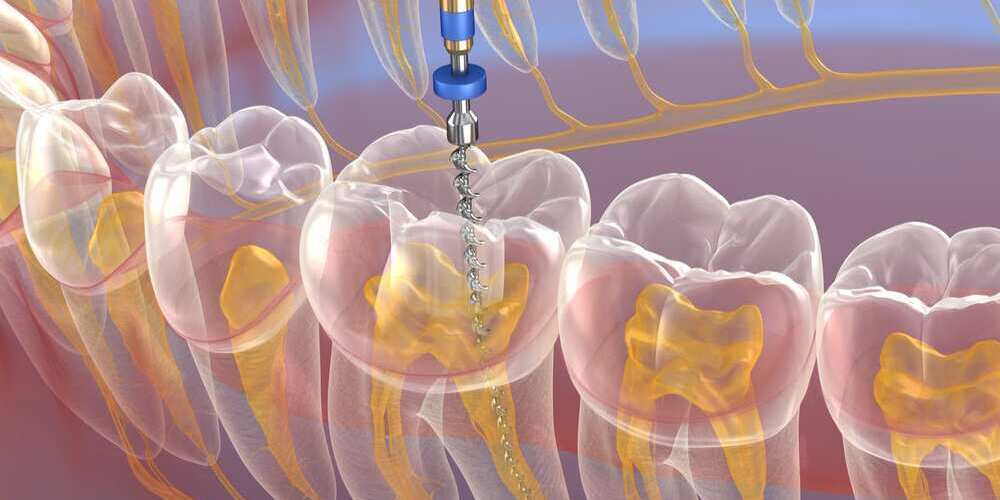
Root canal retreatment is the procedure of repeating root canal treatment on a tooth that has previously undergone endodontic treatment but has not healed as expected or has developed a new infection over time. In endodontics, this procedure is also referred to as endodontic retreatment.
During retreatment, the existing root canal filling materials are removed. The root canal system is then reassessed, cleaned, and disinfected. Once appropriate conditions have been established, the canals are filled again with the aim of preserving the tooth in the mouth.
The development of pain or infection in a previously root canal-treated tooth does not necessarily mean that the tooth must be extracted. If the tooth can be preserved from both restorative and periodontal perspectives, root canal retreatment may be an important treatment option.
Why Is Root Canal Treatment Repeated?
A successfully root canal-treated tooth can remain functional for many years. However, in some teeth, healing may not occur after the initial treatment, or a new problem may develop years later.
Common reasons for considering root canal retreatment include:
Untreated Root Canals: Some teeth have highly complex root canal anatomy. An additional canal that was not identified or accessed during the initial treatment may allow infection to persist.
Inadequate Root Canal Treatment: Insufficient cleaning to the appropriate canal length, inadequate disinfection, or an inadequate root canal filling may affect the outcome of treatment.
Complex Root Canal Anatomy: Narrow, curved, calcified, or anatomically unusual canals can make the initial treatment more difficult.
New Tooth Decay: New decay affecting a root canal-treated tooth may allow bacteria to re-enter the root canal system.
Leakage from the Restoration: If the integrity of a filling or crown is compromised, microorganisms from the mouth may gain access to the root canal system again.
Delayed Final Restoration: In some cases, leaving a tooth without an appropriate permanent restoration for an extended period after root canal treatment may increase the risk of recontamination.
Fracture of the Tooth or Restoration: A fracture involving the treated tooth or its restoration may expose the root canal system to the oral environment again.
Pain or radiographic changes in a root canal-treated tooth do not automatically indicate failed root canal treatment. The underlying cause of the problem should first be diagnosed accurately.
How Can You Tell If a Root Canal Treatment Has Failed?
A tooth with a problem following root canal treatment does not always cause pain.
Some patients may experience:
Spontaneous pain or pain while chewing
Sensitivity when biting on the tooth
Gum swelling
Recurrent abscesses
A small fistula or sinus tract on the gum that periodically appears and disappears
A radiographic lesion around the root
In some cases, a problem may be identified during routine radiographic follow-up even when the patient has no symptoms.
The presence of a lesion around the root tip on a radiograph taken immediately after root canal treatment does not necessarily mean that treatment has failed. Bone healing may take time.
For this reason, the outcome of root canal treatment should be assessed by considering clinical findings, the patient’s symptoms, and radiographic follow-up over time.
How Is Root Canal Retreatment Performed?
Root canal retreatment can be more complex than initial root canal treatment in certain cases.
This is because filling materials have already been placed within the root canals, and the tooth may also contain restorations such as fillings, crowns, or fiber posts.
Clinical and Radiographic Assessment
The first step is to investigate why the tooth did not heal as expected or why a new problem developed.
The quality of the existing root canal treatment, root anatomy, coronal restoration, and bone surrounding the roots are evaluated.
In complex cases, cone beam computed tomography (CBCT) may be used when clinically indicated to examine the root and canal anatomy in three dimensions.
Accessing the Existing Restoration
To gain access to the root canals, part or all of the existing restoration may need to be removed.
Crowns, posts, and other restorations can sometimes make access to the root canal system more difficult.
Whether the existing restoration can be preserved should therefore be evaluated individually.
Removing the Existing Root Canal Filling
The filling materials previously placed within the root canals are carefully removed using specialized endodontic instruments.
The aim is to regain access to the root canal system while preserving as much healthy tooth structure as reasonably possible.
Reassessing the Root Canal System
Once the previous root canal filling has been removed, the canal anatomy is reassessed.
Additional canals that may have been missed during the initial treatment, anatomical variations, and other factors that could have affected the original treatment are investigated.
Cleaning and Disinfection
The root canals are cleaned and shaped again.
Appropriate irrigation solutions are used with the aim of reducing microorganisms and removing tissue remnants from within the root canal system as effectively as possible.
Depending on the condition of the tooth and the nature of the infection, treatment may be completed in a single appointment or may require multiple visits.
Refilling the Root Canals
Once the root canal system has been appropriately cleaned, disinfected, and prepared, the canals are filled again using suitable root canal filling materials.
Restoring the Tooth
Following retreatment, the restoration of the tooth is reassessed.
Depending on the amount of remaining healthy tooth structure, a filling, onlay, crown, or another appropriate restoration may be planned.
For long-term success, both the quality of the root canal treatment and the seal and structural integrity of the final restoration are important.
Root Canal Retreatment Under a Microscope
A dental operating microscope can provide important advantages, particularly during root canal retreatment.
In a previously treated tooth, canal openings may be covered by restorative materials, or additional canals may have been missed during the original procedure.
A microscope provides magnification and powerful illumination that can assist the dentist in:
Evaluating root canal openings
Searching for previously missed canals
Locating calcified canals
Removing existing root canal materials in a controlled manner
Evaluating separated endodontic instruments
Detecting and managing perforations
However, the use of a microscope does not guarantee successful treatment. The outcome depends on many factors, particularly the underlying cause of the problem and the current condition of the tooth.
Can a Separated Instrument Be Removed During Retreatment?
If an endodontic instrument fractured during previous root canal treatment and remains inside the canal, it is evaluated separately during retreatment.
Whether the separated instrument can be removed depends on:
Its position within the root canal
Curvature of the root
Length of the instrument fragment
Amount of healthy tooth structure surrounding it
Amount of root structure that would need to be removed to retrieve it
Dental microscopes and ultrasonic systems may assist in removing separated instruments in suitable cases.
However, not every separated instrument necessarily needs to be removed. If attempting removal would result in excessive loss of root structure or create a significant risk of perforation, alternative treatment strategies may be considered.
Can Root Canal Retreatment Be Performed on a Tooth with a Fiber Post?
Some root canal-treated teeth with significant loss of tooth structure may contain a fiber post.
If root canal retreatment becomes necessary, the existing fiber post may need to be removed.
The type and length of the post, the bonding system used, root anatomy, and amount of remaining healthy tooth structure can all influence the difficulty of the procedure.
In suitable cases, magnification and ultrasonic systems may be used to help remove the post in a controlled manner.
However, post removal is not without risk. The potential loss of root structure and risk of perforation should be assessed before deciding on treatment.
Root Canal Retreatment or Apical Resection?
When a previously root canal-treated tooth has a persistent infection around the root tip, two different approaches may be considered:
Root canal retreatment or apical resection (apicoectomy).
If the problem originates within the root canal system and the canals can be accessed again, nonsurgical root canal retreatment may be considered first.
For example, if a canal was missed during the original treatment or the root canal filling is inadequate, surgically removing tissue around the root tip alone may not address the underlying cause within the canal system.
In contrast, apical resection may be considered in selected cases where the root canal system cannot reasonably be accessed again because of existing restorations or where the problem cannot be resolved through a conventional intracanal approach.
The same method is not appropriate for every patient. The decision should be based on clinical and radiographic findings.
Root Canal Retreatment or Tooth Extraction?
The development of a new infection in a previously root canal-treated tooth does not automatically mean that the tooth should be extracted.
Retreatment may be considered when the tooth:
Can be restored adequately
Has sufficient periodontal support
Does not have a non-restorable root fracture
Has a root canal system that can reasonably be accessed again
If preserving the natural tooth is feasible under appropriate conditions, evaluating retreatment before proceeding directly to tooth extraction and implant treatment may be worthwhile.
However, retreatment may not be appropriate when there is a vertical root fracture, severe periodontal support loss, or extensive structural damage that makes the tooth non-restorable.
How Many Appointments Does Root Canal Retreatment Require?
The number of appointments required varies between patients.
Treatment duration may depend on:
Number of roots and canals
Root canal anatomy
Characteristics of the previous root canal filling
Presence of a post or separated instrument
Extent and nature of the infection
Complications encountered during treatment
Some cases may be completed in a single appointment, while complex retreatment cases may require multiple visits.
It is not appropriate to provide an exact treatment duration without clinical and radiographic assessment.
Is Root Canal Retreatment Painful?
Root canal retreatment is generally performed under local anesthesia.
When adequate anesthesia has been achieved, significant pain during the procedure is not usually expected.
Mild sensitivity or discomfort when biting may occur for several days after treatment.
This sensitivity may be more noticeable when infection was already present around the root before retreatment.
The dentist should be contacted if severe or progressively worsening pain, significant swelling, or another unexpected symptom develops.
Success of Root Canal Retreatment
Root canal retreatment can help preserve the natural tooth in appropriately selected cases. However, successful treatment cannot be guaranteed in every case.
The outcome may depend on:
The reason the initial root canal treatment failed
Root canal anatomy
Characteristics of the infection
Condition of the tissues surrounding the root
Presence of perforations or fractures
Amount of remaining healthy tooth structure
Quality of the new root canal treatment
Quality of the final restoration
For this reason, successful retreatment involves more than simply removing the old root canal filling and replacing it. Whenever possible, it is important to identify why the previous treatment did not succeed and address the underlying cause.
What Should You Consider After Root Canal Retreatment?
After retreatment, attention to oral hygiene and the final restoration is important for the long-term preservation of the treated tooth.
Brush the teeth regularly.
Clean between the teeth using appropriate methods.
Avoid chewing very hard foods on the treated tooth until the permanent restoration has been completed.
Protect any temporary restoration.
Do not unnecessarily delay the final restoration.
Attend recommended clinical and radiographic follow-up appointments.
In teeth that previously had a lesion around the root tip, radiographic evidence of bone healing may take time to become visible. The success of treatment is therefore assessed not only immediately after the procedure but also during follow-up appointments.
Root Canal Retreatment in Üsküdar, Istanbul
At Dentsmile Oral and Dental Health Clinic – Üsküdar, Istanbul, when evaluating a patient for root canal retreatment, we first aim to determine why the previous root canal treatment did not heal as expected or why a new problem developed years later.
If clinical and radiographic assessment indicates that the tooth can reasonably be preserved, root canal retreatment may be planned. In complex cases, a dental operating microscope, magnification systems, ultrasonic instruments, and three-dimensional imaging may be used when clinically indicated.
For patients requiring root canal retreatment in Üsküdar, the objective is not simply to replace the existing root canal filling. Whenever possible, the factor responsible for the previous treatment failure should be identified and addressed so that the natural tooth can be returned to healthy function.
When pain or infection develops again in a previously root canal-treated tooth, tooth extraction does not always have to be the first option.
At Dentsmile, our fundamental approach is to assess whether the tooth can be preserved from restorative and periodontal perspectives, determine the most appropriate option among root canal retreatment, apical resection, and other treatment alternatives, and preserve the natural tooth whenever clinically feasible.