Prosthetic Dentistry
Fixed Prosthesis
Comprehensive information about Fixed Prosthesis, treatment steps and FAQs — Dentsmile.
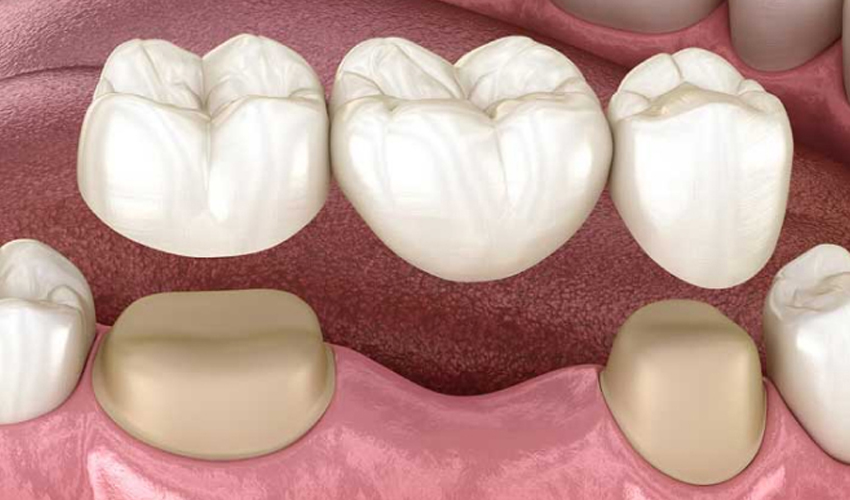
A fixed dental prosthesis is a general term for dental restorations designed to restore the function and appearance of lost tooth structure or missing teeth and which cannot be removed and reinserted by the patient on a daily basis. Crowns, tooth-supported bridges, and implant-supported fixed restorations can all be included in this category.
The purpose of fixed prosthetic treatment is not simply to replace a missing tooth or cover a damaged tooth. Restoring chewing function, maintaining proper contact between the teeth, establishing an appropriate bite, and achieving as natural an appearance as possible are all important aspects of treatment.
At Dentsmile Oral and Dental Health Clinic, when planning fixed prosthetic treatment in Üsküdar, we evaluate the condition of the existing teeth, the number of missing teeth, gum and bone health, bite relationship, and the patient’s aesthetic expectations together. Treatment selection should be based not only on the material to be used but also on the existing conditions within the mouth.
When Is a Fixed Dental Prosthesis Used?
Fixed prostheses can be used for a variety of clinical needs.
They may particularly be considered for:
Restoring teeth with extensive loss of tooth structure
Teeth with large fractures
Protecting appropriately selected root canal-treated teeth
Replacing one or more missing teeth
Replacing old crowns or bridges that have lost their fit
Providing permanent restorations over dental implants
Correcting tooth shape and color problems in suitable cases
However, not every damaged tooth needs to be covered with a crown, and not every missing tooth needs to be replaced with a bridge. When an adequate result can be achieved with a more conservative treatment, preserving natural tooth structure should be the priority.
What Are the Types of Fixed Dental Prostheses?
A fixed dental prosthesis does not refer to a single treatment method. Different types of restorations can be prepared according to the patient’s needs.
Crown
A crown is a restoration designed to surround the remaining structure of a tooth that has suffered extensive tissue loss, restoring its shape and function.
It is commonly referred to as a dental cap or tooth crown.
Crown treatment may be considered when a significant portion of the tooth structure has been lost because of extensive decay, fractures, or large restorations.
Dental Bridge
When one or more teeth are missing, a fixed dental bridge can be used to restore the space by obtaining support from neighboring teeth.
In conventional bridges, suitable teeth on either side of the missing tooth are prepared to support the prosthesis.
However, because this approach requires preparation of the neighboring teeth, dental implant treatment should also be considered during treatment planning, particularly when replacing a single missing tooth.
Implant-Supported Fixed Prosthesis
These are fixed restorations placed over dental implants that have been inserted to replace missing teeth.
A single crown can be placed over one implant, while multiple implants may be used to support fixed bridges or full-arch restorations.
Implant-supported fixed prostheses may make it possible to restore a missing tooth or teeth without obtaining support from the adjacent natural teeth.
How Is Fixed Prosthetic Treatment Performed?
A detailed evaluation of the mouth and teeth is required before treatment.
If gum disease, active tooth decay, or an infection requiring treatment is present, these conditions should be brought under control before proceeding with the prosthetic phase.
When a crown or tooth-supported bridge is planned, the supporting teeth are prepared appropriately for the restoration.
An impression is then obtained using either a conventional impression technique or digital intraoral scanning.
Using these records, the following characteristics of the restoration are planned:
Fit with the teeth
Contacts with neighboring teeth
Chewing surface
Bite relationship
Color
Shape
Once the restoration has been prepared, it is tried in the mouth and the necessary checks are performed. When its fit and function are considered appropriate, the prosthesis is permanently secured to the tooth or implant.
Digital Impressions for Fixed Dental Prostheses
Today, digital intraoral scanners can be used alongside conventional impression techniques in fixed prosthetic treatment.
An intraoral scanner creates a three-dimensional digital record of the prepared teeth and surrounding tissues.
Digital impressions can be transferred to CAD/CAM systems, allowing the restoration to be designed digitally.
Digital systems may provide a more comfortable impression-taking experience, particularly for patients who find conventional impression materials uncomfortable. However, successful fixed prosthetic treatment depends not only on technology but also on proper tooth preparation, healthy gum tissues, appropriate material selection, and accurate intraoral fit of the restoration.
What Materials Are Used for Fixed Dental Prostheses?
Different materials can be used to manufacture fixed dental prostheses.
These may include:
Zirconia
All-ceramic materials such as lithium disilicate
Porcelain-fused-to-metal restorations
Various other ceramic systems
Material selection should not be based solely on aesthetic expectations.
Factors such as whether the restoration is located in the anterior or posterior region, the chewing forces it will be exposed to, the amount of remaining tooth structure, restoration thickness, bridge span, and whether the patient clenches or grinds their teeth should all be considered when selecting the material.
Zirconia Fixed Dental Prostheses
Zirconia is one of the materials currently used for fixed dental prostheses.
Because of its high mechanical strength, it can be used for various restorations in both anterior and posterior regions. When combined with appropriate ceramic systems, it can provide aesthetic results that closely resemble natural teeth.
However, it is not correct to assume that every fixed dental prosthesis should be made from zirconia.
Different ceramic materials may be preferred in certain anterior cases where aesthetics are particularly important, while restorations exposed to greater chewing forces may require different mechanical properties.
Material selection should therefore be individualized according to the patient and the specific restoration.
What Is the Difference Between Fixed and Removable Dentures?
Fixed dental prostheses are not removed by the patient on a daily basis. They remain attached to the teeth or implants.
Removable dentures, on the other hand, can be removed from and reinserted into the mouth by the patient.
Removable dentures may be preferred in some patients who are missing multiple teeth or do not have sufficient tooth or implant support for a fixed restoration.
Today, dental implant treatments may allow fixed restoration options to be considered in certain cases that previously could only be treated with removable dentures.
Fixed Dental Bridge or Implant?
Two common treatment options for replacing one or several missing teeth are fixed dental bridges and dental implants.
For a conventional tooth-supported bridge, suitable teeth adjacent to the missing tooth may need to be prepared to support the prosthesis.
With implant treatment, an implant can be placed in the area of the missing tooth, potentially allowing the restoration to be completed without relying on neighboring teeth for support.
However, a dental implant is not automatically the more appropriate option for every patient.
Available bone volume, systemic health, gum health, characteristics of the missing tooth area, existing restorations on neighboring teeth, and the patient’s expectations should all be evaluated.
For example, the treatment plan may differ if the teeth adjacent to the missing tooth already require crowns.
Therefore, the decision between a bridge and an implant should not be based solely on the number of missing teeth.
Fixed Prostheses for Root Canal-Treated Teeth
It is not accurate to say that every root canal-treated tooth must be covered with a crown.
The choice of restoration should depend on the amount of healthy tooth structure remaining, the location of the tooth in the mouth, and the forces to which it is exposed.
Particularly in posterior root canal-treated teeth with extensive loss of tooth structure, protection of the cusps may be necessary. In such cases, restorations such as onlays, overlays, or crowns may be considered.
In some cases where a large amount of tooth structure has been lost, a fiber post may be required to provide support for the restoration.
The objective is not to automatically place a crown on every root canal-treated tooth, but to select an appropriate restoration that preserves the remaining natural tooth structure.
Are Teeth Reduced for Fixed Dental Prostheses?
In conventional crown and tooth-supported bridge treatments, a certain amount of tooth preparation is required to create sufficient space for the restoration.
Because this procedure involves irreversible removal of tooth structure, unnecessary crown treatment should be avoided.
If restoring only a specific portion of the tooth is sufficient, more conservative restorations such as inlays, onlays, or overlays may be considered.
A fundamental principle of modern restorative dentistry is to intervene only to the extent required by the treatment while preserving as much healthy natural tooth structure as possible.
Advantages of Fixed Dental Prostheses
When properly planned, fixed dental prostheses can provide important functional and aesthetic benefits.
Fixed prosthetic treatment can:
Replace spaces caused by missing teeth
Restore chewing function
Restore teeth with extensive loss of tooth structure
Recreate the anatomical form of the teeth
Provide an appearance close to natural teeth with appropriate materials
Provide fixed restorations over dental implants
However, the long-term success of a prosthesis does not depend solely on the quality of the material used. Proper treatment planning and the patient’s oral hygiene habits are also important.
How Long Does a Fixed Dental Prosthesis Last?
It is not appropriate to give a single definitive lifespan for fixed dental prostheses that applies to every patient.
The long-term success of a restoration depends on:
Health of the supporting teeth
Condition of the gum and bone tissues
Fit of the prosthesis within the mouth
Material used
Chewing forces
Teeth clenching or grinding habits
Oral hygiene
Regular dental check-ups
Although the prosthesis itself does not develop tooth decay, the natural tooth structure underneath and around the margins of a crown or bridge can still develop cavities. For this reason, oral hygiene should not be neglected after prosthetic treatment.
How Should Fixed Dental Prostheses Be Maintained?
Daily care of fixed dental prostheses should not be considered separately from the care of natural teeth.
The areas around crowns should be brushed regularly, and the spaces between teeth should be cleaned using appropriate methods.
With dental bridges, the area beneath the pontic that replaces the missing tooth cannot always be cleaned effectively with conventional dental floss. Special bridge floss, interdental brushes, or other cleaning aids recommended by the dentist may be used in these areas.
With implant-supported fixed prostheses, maintaining cleanliness around the implant tissues is also important for long-term health.
Regular professional examinations allow the condition of both the prosthesis and its supporting tissues to be evaluated.
Achieving a Natural Appearance with Fixed Dental Prostheses
Particularly with fixed restorations in the anterior region, simply matching the color of the tooth is not sufficient.
To achieve a natural appearance, the following should be evaluated together:
Tooth dimensions
Tooth shapes
Proportions between the teeth
Light transmission
Surface texture
Relationship with the gum tissue
Harmony with the lips and smile line
Restorations that are excessively white or have identical shapes may not appear natural in every patient.
The objective of aesthetic fixed prosthetic treatment is not for the prosthesis itself to attract attention, but for it to blend as naturally as possible with the patient’s face, smile, and existing natural teeth.
Fixed Prosthetic Treatment in Üsküdar
At Dentsmile Oral and Dental Health Clinic, when planning fixed prosthetic treatment in Üsküdar, we first evaluate the current condition of the natural teeth and surrounding tissues.
If a tooth can be preserved with a more conservative restoration, we prefer to avoid unnecessary full-crown treatment. In cases of missing teeth, we evaluate fixed bridges, implant-supported prostheses, and other alternatives together with the available bone structure and the condition of neighboring teeth.
The material used for fixed prosthetic treatment is also not the sole deciding factor. The choice between zirconia, all-ceramic, and other restorative materials should be based on the location of the tooth, aesthetic expectations, chewing forces, and the specific requirements of treatment.
Our fundamental approach to fixed dental prostheses in Üsküdar is to preserve as much natural tooth structure as possible, select the appropriate restoration for the correct indication, and ensure that the final prosthesis provides not only an aesthetic appearance but also proper function and compatibility with the surrounding oral tissues.