
Prosthetic Dentistry
Implant-Supported Denture Treatment
Comprehensive information about Implant-Supported Denture, treatment steps and FAQs — Dentsmile.
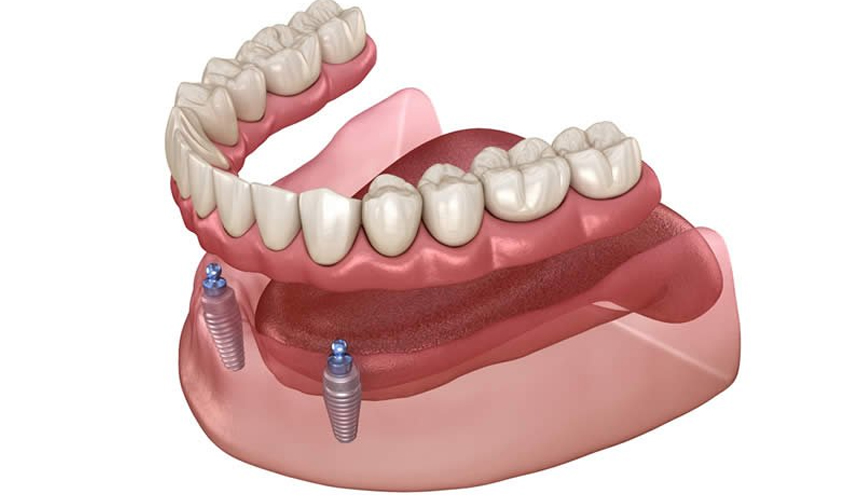
A removable denture is a dental prosthesis designed to replace some or all missing teeth and can be inserted and removed by the patient. Depending on the extent of tooth loss, removable dentures may be designed as complete, partial, or implant-supported prostheses.
At Dentsmile Oral and Dental Health Clinic, when planning removable denture treatment in Üsküdar, we consider not only the number of missing teeth but also the health of the remaining natural teeth, the structure of the jawbone, the bite relationship, and the patient’s expectations from the prosthesis.
Types of Removable Dentures
Removable dentures prepared when all natural teeth have been lost are known as complete dentures (full dentures). They are also commonly referred to as full removable dentures or false teeth.
When some natural teeth remain in the mouth, removable partial dentures may be used. These prostheses obtain support from the remaining natural teeth and oral tissues.
Conventional partial dentures may use clasps attached to natural teeth to provide retention. For patients who are concerned about the visibility of metal clasps, precision attachment dentures may be considered when the oral conditions are suitable.
In some completely edentulous patients where conventional complete dentures do not provide sufficient retention, dental implants may be used for additional support. These prostheses are known as implant-supported overdentures.
How Are Removable Dentures Made and How Do You Adapt to Them?
Removable denture treatment generally involves several stages, including impressions, bite registration, and try-in appointments. Depending on the type of prosthesis, additional stages such as metal framework or tooth arrangement try-ins may also be required.
During this process, not only the color and shape of the teeth but also the fit of the denture with the oral tissues, the bite relationship between the upper and lower jaws, speech, and chewing function are evaluated.
Treatment is not considered completely finished immediately after the denture has been delivered. Particularly during the first few days, pressure points or sore areas may develop. Follow-up appointments allow the necessary adjustments to be made so that the patient can use the denture more comfortably.
Adapting to a new removable denture requires a certain amount of time. This period may vary depending on the patient’s oral anatomy, whether they have previously worn dentures, and the type of prosthesis.
During the first few days, taking smaller bites, choosing softer foods, and distributing chewing as evenly as possible between both sides of the mouth may help with adaptation.
Patients who have worn the same denture for many years may initially find the shape and bite of a new prosthesis different. For this reason, it is generally better to allow time for adaptation and address any problems together with the dentist rather than immediately returning to the old denture.
Cleaning and Care of Removable Dentures
For removable dentures to remain healthy and functional, both the prosthesis and the oral tissues should be cleaned regularly.
The denture can be removed after meals and cleaned under running water using an appropriate denture brush. Abrasive products that may scratch the denture surface and unsuitable chemical cleaning agents should be avoided.
To reduce the risk of dropping and breaking the denture during cleaning, it may be helpful to fill the sink with water or clean the denture over a soft surface.
It is generally recommended to remove removable dentures at night, allowing the oral tissues covered by the prosthesis throughout the day to rest. How the denture should be stored outside the mouth depends on the denture material and the dentist’s recommendations.
When denture-cleaning products are used, the manufacturer’s instructions should be followed. Denture-cleaning tablets do not replace regular mechanical cleaning but may be used as an additional cleaning aid when appropriate.
Oral hygiene remains important even in patients with no natural teeth. Cleaning of the tongue, palate, and other soft tissues inside the mouth should not be neglected.
If the denture becomes loose over time, causes sores, or moves noticeably during chewing, it should be evaluated by a dentist.
Implant-Supported Removable Dentures (Overdentures)
One of the main challenges associated with conventional removable dentures in completely edentulous patients is achieving adequate retention, particularly in the lower jaw.
In patients with suitable jawbone anatomy and general health, dental implants may be used to provide additional support and improve the stability of the denture.
Implant-supported overdentures can be inserted and removed by the patient. Unlike conventional complete dentures, however, they attach to dental implants through specialized attachment systems.
This can help reduce denture movement during speaking and chewing and may provide the patient with more controlled and stable function.
The number of implants and the type of attachment system are not the same for every patient. These factors are determined according to the condition of the jawbone, whether treatment is being performed in the upper or lower jaw, the available prosthetic space, and the overall treatment plan.
Ball Attachment Overdenture
In ball attachment systems, specialized attachment components are placed on the implants to provide retention for the denture.
Corresponding housings are incorporated into the removable denture. When the denture is inserted into the mouth, the two components engage with each other, providing more controlled retention than a conventional complete denture.
One of the main advantages of this system is that, in appropriately selected cases, the denture can obtain implant support through a relatively straightforward attachment mechanism.
The attachment components may wear over time. For this reason, periodic examinations and replacement of the retentive components may occasionally be necessary.
Bar-Retained Overdenture
In bar-retained overdenture systems, multiple implants are connected to one another through a custom-made bar.
The removable denture contains an attachment mechanism designed to engage with this bar. When the prosthesis is placed in the mouth, retention and support are obtained through the bar system.
In suitable patients, bar-retained dentures may help distribute forces between the implants and reduce movement of the prosthesis within the mouth.
However, maintaining good oral hygiene underneath the bar and around the implants is particularly important.
Locator-Retained Overdenture
A Locator-retained overdenture is one of the commonly used attachment systems for implant-supported removable dentures.
Low-profile attachment components are placed on the implants, while corresponding retentive elements are incorporated into the denture.
When the denture is inserted, these components engage with one another and increase the retention of the prosthesis.
The low-profile design of Locator attachments may provide an advantage in certain patients where the vertical space available for the prosthesis is limited. Because the retentive components can wear over time, they may need to be replaced during follow-up appointments.
The number of implants used should not be determined solely by the desire to achieve greater retention. The available bone, jaw anatomy, and characteristics of the planned prosthesis should all be evaluated together.
Removable and Implant-Supported Denture Treatment in Üsküdar
At Dentsmile Oral and Dental Health Clinic, when planning removable denture treatment in Üsküdar, we adopt an approach aimed at preserving the patient’s remaining natural teeth and jawbone as much as possible.
For completely edentulous patients, a conventional complete denture may provide an appropriate solution. In suitable cases where conventional dentures do not provide adequate retention, implant-supported overdenture options may also be considered.
The choice between ball, bar, and Locator attachment systems is not based solely on retention. Implant position, bone structure, oral hygiene, available prosthetic space, and the patient’s daily functional needs are evaluated together.
Our primary objective is not simply to replace missing teeth aesthetically, but to provide a prosthesis that is as comfortable as possible during speaking and chewing, can be cleaned effectively, and can be regularly monitored and maintained over the long term.