
Periodontal Treatments
Removal Dental Tartar
Comprehensive information about Removal Dental Tartar, treatment steps and FAQs — Dentsmile.
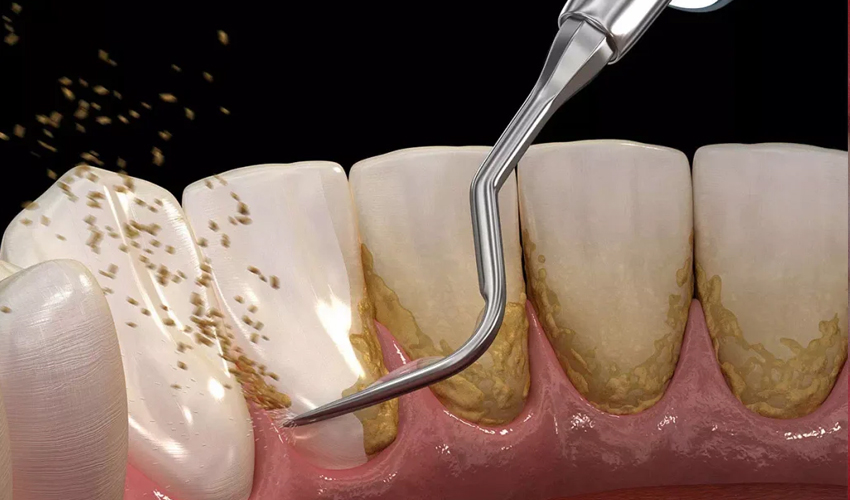
Dental tartar (calculus) forms when bacterial plaque that accumulates on the teeth hardens over time due to minerals present in saliva. While plaque is still soft, it can be removed through regular brushing and interdental cleaning. Once it has hardened into tartar, however, it cannot be removed with normal tooth brushing.
Tartar commonly accumulates along the gum line, between the teeth, and, in some patients, below the gums. Its rough surface makes it easier for new bacterial plaque to adhere, which may negatively affect gum health.
At Dentsmile Oral and Dental Health Clinic, before performing tartar removal in Üsküdar, we evaluate not only the visible tartar but also the condition of the gums. While routine professional scaling may be sufficient for some patients, those with periodontal disease may require additional treatment below the gum line.
What Causes Dental Tartar?
The primary cause of tartar formation is bacterial plaque that has not been adequately removed from the tooth surfaces.
Irregular brushing, incorrect brushing techniques, failure to clean between the teeth, and plaque accumulation in difficult-to-reach areas may contribute to tartar formation.
However, tartar does not develop at the same rate in everyone. Factors such as the composition and mineral content of saliva, the position of the teeth, oral hygiene habits, and smoking may also influence the amount of tartar that forms.
Some patients may develop tartar more quickly than others despite maintaining good oral hygiene. For this reason, the appropriate frequency of professional dental cleaning should be determined individually.
What Happens If Tartar Is Not Removed?
One of the main effects of tartar is that its rough surface makes it easier for bacterial plaque to accumulate.
Over time, this may lead to redness, swelling, and bleeding gums. Bad breath may also be associated with tartar and the accompanying plaque accumulation.
In the early stages, gum inflammation may be limited to gingivitis. In individuals who are susceptible to periodontal disease, however, bacterial plaque and gum inflammation that remain uncontrolled for a prolonged period may be associated with periodontitis, which affects the tissues supporting the teeth.
Loose teeth are not caused directly by tartar itself. If tooth mobility is present, the bone and periodontal tissues supporting the tooth should be evaluated for possible tissue loss.
Tartar may also make tooth discoloration more noticeable, particularly in people who smoke or regularly consume tea and coffee.
How Is Tartar Removed?
Before tartar removal, the teeth and gums are examined. The amount of tartar and the condition of the gum tissues are evaluated.
During professional cleaning, ultrasonic instruments and hand instruments are generally used to remove hardened deposits from the tooth surfaces.
When necessary, polishing may be performed after scaling to help remove surface stains and create a smoother tooth surface.
If tartar is located below the gum line and within deep periodontal pockets, routine scaling may not be sufficient. In these cases, periodontal treatments such as subgingival cleaning and root surface debridement may be required.
Curettage or fluoride treatment is not necessary after every tartar removal procedure. The need for these treatments should be determined according to the individual condition of the teeth and gums.
Does Tartar Removal Damage the Teeth?
One of the concerns we frequently hear from patients is whether tartar removal damages tooth enamel.
Professional tartar removal performed with appropriate instruments and correct techniques is not intended to wear away the teeth. Its primary purpose is to remove hardened deposits attached to the tooth surfaces.
In patients with heavy tartar accumulation, spaces between the teeth that were previously unnoticed may become visible after cleaning. These spaces are not created by the cleaning procedure; they may simply become visible because the tartar had previously filled them.
Similarly, in patients with existing gum recession, the root surfaces may feel more noticeable after cleaning, and temporary sensitivity to hot and cold temperatures may occur.
How Can Tartar Formation Be Reduced?
Tartar may form again over time even after professional cleaning. For this reason, daily oral hygiene remains important following treatment.
Teeth should be brushed at least twice a day using an appropriate technique, and the spaces between the teeth should be cleaned regularly. Depending on the size of the spaces between the teeth, dental floss or interdental brushes may be used.
Mouthwashes may support oral hygiene in certain situations, but they do not replace tooth brushing or interdental cleaning.
It is also not appropriate to state that everyone should have tartar removed exactly every six months. Some patients may require professional cleaning more frequently, while others may need it at longer intervals. The appropriate follow-up schedule should be determined according to the individual rate of tartar formation and periodontal risk.
Tartar Removal in Üsküdar
At Dentsmile Oral and Dental Health Clinic, before performing tartar removal in Üsküdar, we evaluate not only tartar accumulation but also gum bleeding, gum recession, and the overall condition of the periodontal tissues.
If the gums are healthy and the deposits are superficial, routine professional scaling may be sufficient. If significant deposits are present below the gum line or periodontitis is detected, more comprehensive periodontal treatment may be planned.
Our primary approach is not simply to remove visible tartar, but to maintain gum health, control bacterial plaque accumulation, and provide patients with a healthy oral environment that supports effective daily oral hygiene.