
Oral and Maxillofacial Surgery
Jaw Cyst Treatment
What Is a Jaw Cyst? Jaw Cyst Treatment in Üsküdar. Comprehensive information about Jaw Cyst Treatment, treatment steps and FAQs — Dentsmile.
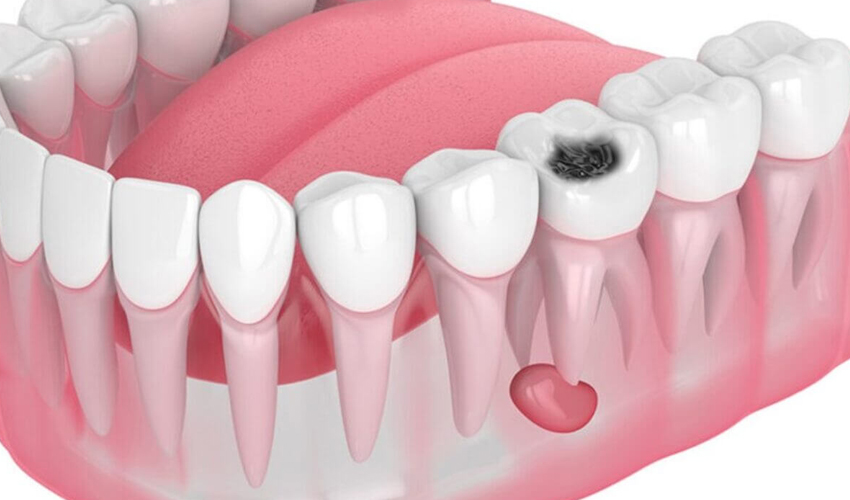
Jaw cysts are pathological lesions that can develop within the jawbones or surrounding soft tissues and are generally filled with fluid or semi-fluid material. Some jaw cysts are associated with infections at the roots of teeth, while others may develop around impacted teeth or originate from tissues involved in tooth development.
An important characteristic of jaw cysts is that, in some cases, they may grow for a long time without causing any symptoms. For this reason, cysts are sometimes discovered incidentally on panoramic X-rays or 3D dental tomography performed during routine dental examinations.
At Dentsmile Oral and Dental Health Clinic, when planning jaw cyst treatment in Üsküdar, we first evaluate the origin and size of the lesion, its relationship with surrounding teeth, and its position within the jawbone. It is important to note that not every cyst-like appearance seen on an X-ray represents the same condition. In some cases, a histopathological examination of the removed tissue is required for a definitive diagnosis.
What Causes Jaw Cysts?
Many different types of cysts can develop in the jaw area.
A significant proportion of tooth-related cysts may be associated with long-standing infections at the tip of a tooth root. Over time, a cystic lesion may develop around the root tip of a tooth that requires root canal treatment or has lost its vitality.
Some cysts may develop around impacted teeth, particularly impacted wisdom teeth. Other types of cysts may originate from tissues involved in tooth development.
For this reason, it is not always possible to determine the exact cause or type of a cyst based solely on its radiographic appearance.
What Are the Symptoms of a Jaw Cyst?
Small jaw cysts may not cause any symptoms.
As a cyst grows, symptoms may develop depending on its location and relationship with surrounding anatomical structures. These may include:
Swelling in the jaw area
Pain or a feeling of pressure
Swelling of the gums
Infection and discharge
Displacement of neighboring teeth
Tooth mobility
Facial asymmetry
Numbness in the lip or jaw area
However, the absence of pain does not mean that a cyst is insignificant. Some jaw cysts may grow without causing symptoms and lead to loss of surrounding bone tissue.
How Is a Jaw Cyst Diagnosed?
When a jaw cyst is suspected, a clinical examination and radiographic evaluation are performed first.
A panoramic X-ray can provide important information about the general location and size of the lesion. For larger lesions, or when a detailed assessment of the cyst’s relationship with the nerve canal, sinus, nasal floor, tooth roots, or other anatomical structures is required, 3D dental tomography (CBCT) may be used.
In some cases, imaging alone is not sufficient to establish a definitive diagnosis. A tissue sample obtained during surgery may need to be sent for histopathological examination.
Pathological examination is important for determining the true nature of the lesion and planning the appropriate follow-up.
How Are Jaw Cysts Treated?
Treatment of a jaw cyst is planned according to its type, size, location, and relationship with surrounding anatomical structures.
Some small, appropriately positioned cysts may be completely removed using a procedure known as enucleation. During this procedure, the cystic lesion is carefully separated from the surrounding tissues and removed.
For larger cysts, complete removal in a single procedure may create an unnecessary risk of damage to surrounding teeth, nerves, or the jawbone. In such cases, techniques such as marsupialization or decompression may be used to reduce pressure within the cyst and allow it to decrease in size over time. A second surgical procedure may then be planned if necessary.
The appropriate treatment method is not the same for every patient.
Do Teeth Associated with a Jaw Cyst Need to Be Removed?
Not every tooth located near a jaw cyst needs to be extracted.
Our priority is to preserve healthy and treatable natural teeth whenever possible. When the cyst originates from a tooth root, root canal treatment or retreatment of an existing root canal may be considered.
In some cases, apicoectomy may also be required to surgically treat the tip of the tooth root.
However, extraction may be considered if the tooth is severely damaged, significantly involved in the cystic lesion, or cannot be predictably preserved over the long term.
The decision is made by evaluating both the characteristics of the cyst and the condition of the associated tooth.
Recovery After Jaw Cyst Surgery
Mild pain, swelling, and tenderness may occur after surgery. The healing process varies depending on the extent of the procedure and the location of the cyst.
Patients should take medications as recommended by their dentist and follow the instructions provided for caring for the surgical area.
Treatment does not always end once the cyst has been removed. Depending on the type of cyst, clinical and radiographic follow-up may be necessary.
The jawbone gradually fills the area previously occupied by the cyst over time. This process may take longer when the cystic cavity is large.
Can Jaw Cysts Recur?
The risk of recurrence depends on the type of jaw cyst.
Some cysts have a low tendency to recur after appropriate treatment, while other cystic lesions may require longer-term follow-up.
For this reason, when indicated, the removed tissue should be sent for pathological examination, and the follow-up schedule should be planned according to the pathology results.
Patients who have previously undergone surgery for a jaw cyst should attend the recommended radiographic follow-up appointments.
Jaw Cyst Treatment in Üsküdar
At Dentsmile Oral and Dental Health Clinic, before planning jaw cyst treatment in Üsküdar, we evaluate the size and position of the cyst within the jawbone, the associated teeth, and the surrounding anatomical structures together.
When necessary, 3D dental tomography may be used in addition to panoramic X-rays to examine the cyst’s relationship with the nerve canal, sinus, and neighboring teeth in greater detail.
Treatment may involve complete removal of the cyst or surgical techniques such as decompression or marsupialization. For teeth associated with the cyst, options such as root canal treatment, root canal retreatment, or apicoectomy may be considered whenever preservation of the natural tooth is possible.
Our primary approach is not only to remove the cyst, but also to establish the correct diagnosis, preserve surrounding healthy tissues whenever possible, and provide appropriate follow-up after treatment.