Orthodontics
Orthodontic treatment
What Is Orthodontics? Correction of Tooth and Jaw Irregularities
Orthodontics is the branch of dentistry that evaluates and, when necessary, corrects the position of the teeth within the jawbones, the alignment of the dental arches, and the relationship between the upper and lower jaws.
The aim of orthodontic treatment is not simply to make the teeth look straighter. A properly planned treatment may aim to:
Improve tooth alignment
Establish a more harmonious relationship between the upper and lower teeth
Improve chewing function
Make oral hygiene easier
Support the long-term health of the teeth and surrounding tissues
Create a smile that is more harmonious with the face
Orthodontic treatment can be performed during childhood as well as in adults whose teeth and supporting tissues are suitable for treatment.
At Dentsmile Clinic – Üsküdar, Istanbul, our orthodontic assessment is not limited to evaluating crooked teeth. We assess jaw relationships, the bite, facial profile, gum health, and bone support together to create an individualized treatment plan.
What Is Orthodontics?
Orthodontics is a dental specialty concerned with the development, position, and relationship of the teeth and jaws.
Straight-looking teeth are an important part of orthodontics, but they are not the only objective.
For example, a patient may have relatively straight front teeth while the bite relationship between the back teeth is problematic. Similarly, simply straightening the front teeth of a patient with significant crowding may not constitute adequate treatment if an underlying bite problem is not addressed.
The fundamental principle of orthodontic treatment is therefore to evaluate aesthetics and function together.
What Are the Goals of Orthodontic Treatment?
Orthodontic treatment may be recommended for different reasons depending on the individual patient.
The main objectives include:
Aligning the Teeth
Crowded, rotated, or vertically displaced teeth can be moved toward appropriate positions using controlled orthodontic forces.
Correcting the Bite
The relationship between the upper and lower teeth is an important part of the chewing system.
In suitable cases, orthodontic treatment can be used to address:
Deep bite
Open bite
Crossbite
Forward or backward relationships between the upper and lower teeth
Evaluating Jaw Relationships
The development of the upper and lower jaws can be monitored, particularly in growing children.
With appropriate timing, growth modification may be considered for certain skeletal problems.
Making Oral Hygiene Easier
In areas of significant crowding, cleaning between the teeth and along the gum line may be more difficult.
Improving tooth alignment can make oral hygiene easier.
Improving Smile Aesthetics
Orthodontic treatment can modify:
Tooth alignment
Dental midline
Tooth inclination
Relationship between the teeth and smile line
However, successful treatment should also consider the relationship of the teeth with the lips and face.
What Are Common Orthodontic Problems?
Dental Crowding
When there is insufficient space within the dental arch for the teeth to align properly, they may overlap, rotate, or erupt outside the normal arch.
Crowding can range from mild irregularities to severe space deficiency.
Gaps Between Teeth
Spaces may develop when the teeth are relatively small compared with the jaw or when certain teeth are missing.
A gap between the front teeth is known as a diastema.
Depending on the cause, orthodontics, composite bonding, or other restorative approaches may be considered.
Deep Bite
A deep bite occurs when the upper front teeth overlap the lower front teeth more than expected.
In some cases, the lower front teeth may be barely visible when smiling or may contact the palate.
Open Bite
An open bite occurs when the upper and lower teeth do not contact each other in certain areas.
In an anterior open bite, a gap remains between the front teeth even when the back teeth are closed together.
Childhood habits such as thumb sucking, prolonged pacifier use, and certain tongue habits may contribute to the development of an open bite.
Crossbite
A crossbite occurs when one or more lower teeth bite outside the corresponding upper teeth.
It may affect a single tooth or a larger section of the dental arch.
Early assessment of crossbites is particularly important during growth and development.
Forward or Backward Jaw Position
In some patients, the problem is not limited to tooth position but involves the relationship between the jawbones.
In suitable growing patients, orthopedic or functional treatment approaches may be considered.
In adults with significant skeletal discrepancies, orthodontic treatment alone may not be sufficient, and treatment may need to be combined with orthognathic surgery.
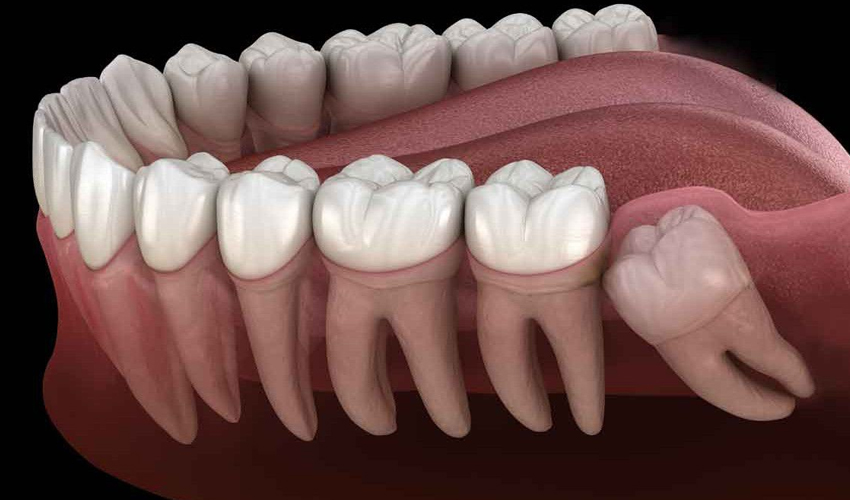
Impacted Teeth
Certain teeth, particularly the canine teeth, may fail to erupt normally into the mouth.
In suitable cases, an impacted tooth can be surgically exposed and gradually guided into the dental arch using orthodontic forces.
What Causes Orthodontic Problems?
Orthodontic irregularities do not have a single cause.
Contributing factors may include:
Genetic characteristics
Discrepancy between tooth size and jaw size
Premature loss of primary teeth
Primary teeth remaining in the mouth longer than expected
Impacted teeth
Missing or extra teeth
Thumb sucking
Prolonged pacifier or bottle use
Certain tongue and lip habits
Trauma
In many patients, genetic and environmental factors contribute together.
At What Age Should Orthodontic Treatment Begin?
The appropriate timing is not the same for every orthodontic problem.
In children, an initial orthodontic assessment can be performed when the permanent teeth begin to erupt. This does not mean that every child needs braces immediately.
Early assessment can help identify:
Jaw development problems
Crossbites
Space deficiencies
Eruption problems
Harmful oral habits
Some children may benefit from early treatment, while others require only regular monitoring until the appropriate treatment stage.
Can Adults Have Orthodontic Treatment?
Yes.
There is no absolute upper age limit for orthodontic treatment.
As long as the bone and gum tissues supporting the teeth are sufficiently healthy, orthodontic tooth movement can also be performed in adults.
However, with increasing age, factors such as:
Gum disease
Bone loss
Missing teeth
Crowns and bridges
Dental implants
Existing restorations
may make treatment planning more complex.
Adult orthodontics may therefore require multidisciplinary planning together with periodontal, prosthetic, and implant treatments.
What Are the Different Types of Orthodontic Treatment?
Several orthodontic systems are available today for different clinical needs.
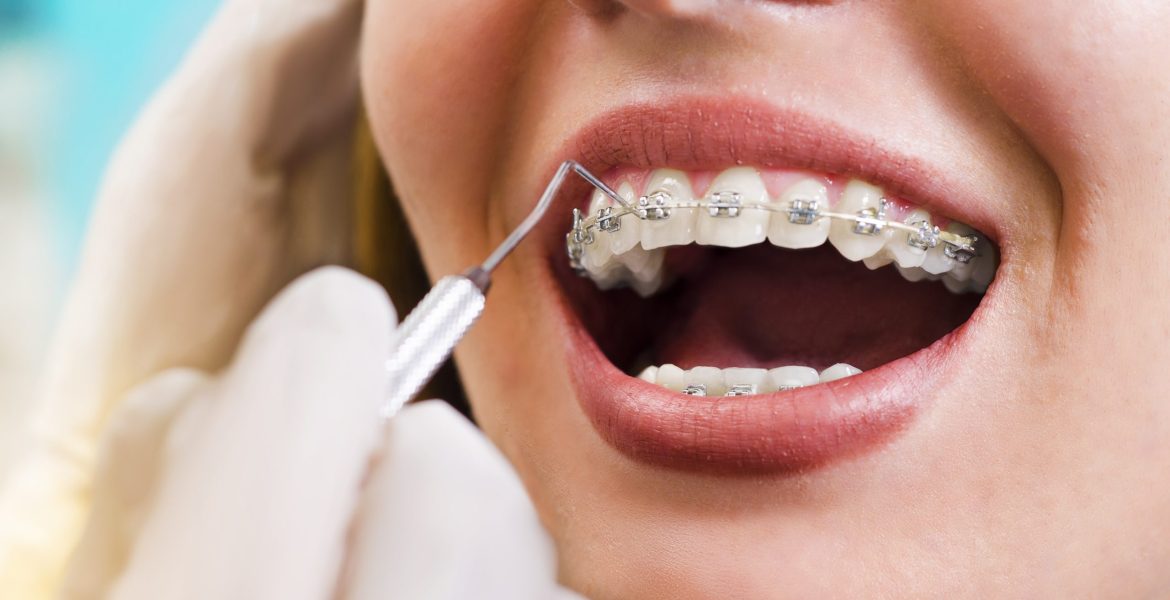
Metal Braces
Metal braces are fixed orthodontic appliances that have been used successfully for many years and can be applied to a wide range of orthodontic problems.
Brackets are bonded to the teeth, and orthodontic wires are used to apply controlled forces.
Advantages include:
Suitability for many different orthodontic problems
Durability
Direct clinical control of tooth movement
Ceramic Braces
Ceramic brackets are tooth-colored or relatively translucent, making them less noticeable than conventional metal brackets.
They may be preferred particularly by adult patients who are concerned about the appearance of braces.
However, they may not provide exactly the same characteristics as metal brackets in every clinical situation. The appropriate system should be selected according to treatment requirements.
Lingual Orthodontics
In lingual orthodontics, brackets are positioned on the inner surfaces of the teeth rather than the outer surfaces.
They are therefore less visible from the outside.
However, lingual systems differ from conventional braces in terms of:
Clinical technique
Tongue comfort
Cleaning requirements
Cost
They may not be suitable for every patient.
Clear Aligner Treatment
Clear aligners are custom-made removable appliances designed to produce digitally planned tooth movements.
Throughout treatment, the patient progresses through a series of different aligners at specified intervals.
Important advantages of clear aligners include:
Discreet appearance
Ability to remove them while eating
Easier tooth cleaning
Digital treatment planning
However, because clear aligners are removable, patient compliance becomes particularly important.
Failure to wear the aligners for the recommended amount of time may interfere with treatment progress.
Are Clear Aligners Better Than Braces?
There is no single answer that applies to every patient.
Clear aligners can be used to treat many orthodontic problems. However, factors such as:
Type of tooth movement required
Severity of crowding
Jaw relationships
Patient’s age
Treatment compliance
are important when selecting the appropriate system.
Clear aligners can be an effective option for many patients, while fixed orthodontic appliances may provide more predictable control in certain complex cases.
The appropriate method should be selected according to the individual patient’s needs.
What Are Functional Appliances?
Functional appliances are orthodontic devices used particularly in growing children to influence the relationship between the upper and lower jaws.
They may be fixed or removable.
Correct timing is particularly important for these treatments.
Once growth is complete, the amount of skeletal change that can be achieved with functional appliances is limited.
What Is Jaw Expansion Treatment?
Expansion appliances may be used in certain patients with a narrow upper jaw.
Particularly during growth and development, correction of maxillary constriction may help:
Correct crossbite
Create additional space for the teeth
Improve the relationship between the upper and lower jaws
The expansion technique used depends on the patient’s age and skeletal development.
Is Tooth Extraction Necessary for Orthodontic Treatment?
Not every orthodontic treatment requires tooth extraction.
However, extraction-based treatment may be considered in cases involving severe space deficiency or certain bite problems.
The decision should take into account:
Tooth positions
Jaw structure
Facial profile
Degree of crowding
Lip support
Bite relationship
Extracting teeth simply because crowding is present is not appropriate. Equally, attempting to avoid extraction under all circumstances is not always the correct approach.
What Tests and Records Are Needed Before Orthodontic Treatment?
Depending on the patient, orthodontic planning may involve:
Clinical examination
Photographs
Digital intraoral scanning or impressions
Panoramic radiography
Cephalometric radiography
Three-dimensional imaging may also be considered when clinically necessary.
These records allow the relationship between the teeth, jawbones, and facial structures to be analyzed.
What Is Digital Orthodontics?
Digital technologies have become an important part of contemporary orthodontic planning.
Intraoral scanners can be used to create digital models of the teeth.
These models may be used for:
Clear aligner planning
Analysis of tooth movements
Before-and-after treatment comparisons
Fabrication of certain orthodontic appliances
Digital systems can facilitate treatment planning, but accurate diagnosis and sound biomechanical planning remain the foundation of successful orthodontic treatment.
How Is Orthodontic Treatment Performed?
1. Examination
The teeth, gums, bite, and jaw relationships are evaluated.
2. Diagnostic Records
Required photographs, radiographs, and digital impressions or scans are obtained.
3. Treatment Planning
The underlying causes of crowding and bite problems are identified.
The orthodontist then evaluates whether braces, clear aligners, or other appliances are most appropriate.
4. Active Treatment
Braces or clear aligners are used to move the teeth gradually and in a controlled manner.
5. Regular Follow-Up Appointments
Tooth movement is monitored throughout treatment, and adjustments are made when necessary.
6. Retention
Once the teeth have reached their planned positions, active orthodontic treatment ends.
However, orthodontic treatment is not considered completely finished at this stage.
Retainers are required to help maintain the new positions of the teeth.
How Long Does Orthodontic Treatment Take?
Treatment duration varies considerably from patient to patient.
Simple tooth movements may be completed relatively quickly, while complex crowding and bite problems generally require longer treatment.
Treatment time may be influenced by:
Severity of the orthodontic problem
Patient’s age
Treatment method used
Biological rate of tooth movement
Regular attendance at appointments
Compliance with elastics or clear aligner wear
Many comprehensive orthodontic treatments may take approximately 12–30 months, but this is only a general range.
An exact treatment duration cannot be determined reliably without clinical assessment.
Is Orthodontic Treatment Painful?
Temporary pressure or sensitivity may occur after braces are placed or when a patient begins wearing a new clear aligner.
This is often more noticeable during the first few days.
Orthodontic tooth movement is achieved using light, controlled biological forces.
Severe or persistent pain should not be considered normal, and the treating dentist or orthodontist should be contacted if it occurs.
How Should Oral Hygiene Be Maintained During Orthodontic Treatment?
Oral hygiene is particularly important for patients wearing fixed braces.
Plaque accumulation around brackets may contribute to:
Gum inflammation
Tooth decay
White spot lesions on enamel
During treatment:
Teeth should be brushed regularly
Areas around the brackets should be cleaned carefully
Interdental brushes should be used when appropriate
Interdental spaces should be cleaned using suitable methods
Regular dental examinations should be maintained
Clear aligner patients should also clean both their teeth and aligners regularly.
Why Are Retainers Important After Orthodontic Treatment?
After orthodontic treatment, teeth have a tendency to move back toward their previous positions. This is known as relapse.
For this reason, the retention phase begins after active treatment.
Retainers may be:
Fixed
Removable
The type of retainer and duration of use are determined individually.
Retention is just as important as active treatment for the long-term stability of orthodontic results.
Can Teeth Become Crooked Again After Orthodontic Treatment?
If retainers are not used as recommended, or if changes occur in the surrounding tissues over time, the teeth may move again.
Tooth position is not completely static throughout life.
Retainer use and follow-up examinations are therefore important.
It is not accurate to assume that teeth can never move again once orthodontic treatment has been completed.
What Are the Advantages of Orthodontic Treatment?
Properly planned orthodontic treatment may:
Improve tooth alignment
Improve bite relationships
Make the teeth easier to clean
Improve the distribution of forces on certain overloaded teeth
Enhance smile aesthetics
Create more favorable tooth positions before restorative or implant treatment
However, the treatment goals should always be individualized.
Are There Risks Associated with Orthodontic Treatment?
Orthodontic treatment is generally safe when properly planned and monitored, but it is not completely without risk.
Possible complications may include:
Tooth decay and white spot lesions associated with inadequate oral hygiene
Gum problems
Limited root resorption in some patients
Tooth movement after treatment
Temporary soft-tissue irritation caused by brackets or appliances
Regular follow-up and patient compliance are important for reducing these risks.
Can Orthodontics Be Combined with Aesthetic Dental Treatments?
Yes.
For some patients, achieving the most natural result may require orthodontic treatment to be combined with:
Composite bonding
Porcelain veneers
Dental implants
Gum aesthetics
Teeth whitening
For example, rather than disguising poorly positioned teeth with porcelain restorations, orthodontics may first be used to move the teeth into more appropriate positions. The aesthetic result can then be completed with more conservative restorations if necessary.
Our fundamental principle is to preserve healthy natural tooth structure whenever possible.
Orthodontic Treatment Prices
Orthodontic treatment costs are not standardized.
The cost may be influenced by:
Scope of treatment
Metal or ceramic braces
Clear aligner system
Treatment duration
Treatment of one or both dental arches
Additional appliances required
Complexity of the case
For this reason, determining an exact treatment cost from photographs alone is not appropriate.
A clinical examination and orthodontic analysis should be performed first.
Orthodontics at Dentsmile Clinic
At Dentsmile Clinic – Üsküdar, Istanbul, orthodontic treatment planning is not limited to straightening crowded teeth. We evaluate the entire chewing system.
Depending on the individual case, treatment planning may incorporate:
Digital intraoral scanning
Panoramic radiography
Cephalometric analysis
Digital orthodontic planning
Photographic and smile analysis
For children, adolescents, and adults, the treatment method is selected according to age, growth status, tooth and jaw relationships, and individual expectations.
Regardless of the orthodontic system used, our fundamental objective remains the same: not simply to make the teeth look straight, but to position them within a healthy and functional bite whenever possible.
Frequently Asked Questions
What is orthodontics?
Orthodontics is the field of dentistry concerned with evaluating and, when necessary, correcting tooth alignment and the relationship between the upper and lower jaws.
At what age can orthodontic treatment be performed?
Early assessment is important in children because certain treatments can benefit from growth and development. In adults, orthodontic treatment can be performed as long as the teeth and supporting tissues are sufficiently healthy.
Are braces or clear aligners better?
Neither system is universally better for every patient. The severity of the problem, required tooth movements, and patient compliance should be evaluated when selecting the appropriate treatment.
How long does orthodontic treatment take?
Treatment duration depends on the complexity of the problem. Comprehensive treatments often take approximately 12–30 months, but the individual treatment time can only be estimated after clinical assessment.
Are teeth extracted during orthodontic treatment?
Extraction is not necessary for every patient. It may be considered in cases involving severe space deficiency or certain bite problems.
Can clear aligners really straighten teeth?
Yes. Clear aligners can produce many different types of tooth movement in appropriately selected cases. Accurate treatment planning and wearing the aligners for the recommended amount of time are important for success.
Is getting braces painful?
Placing brackets is generally not expected to be painful. Temporary pressure and sensitivity may occur during the first few days and after adjustment appointments.
Do I have to wear a retainer after orthodontic treatment?
Retention is an important part of orthodontic treatment because it helps maintain the new positions of the teeth. Without appropriate retainer use, teeth may move again.
Can adults use clear aligners?
Yes. Clear aligners are commonly used as an aesthetic orthodontic option for adults. However, not every orthodontic problem is equally suitable for aligner treatment.
Can orthodontics change the jaw structure?
In suitable growing patients, certain functional and orthopedic approaches may influence jaw development. In adults with completed growth and significant skeletal discrepancies, the ability of orthodontic treatment alone to change the position of the jawbones is limited.
Orthodontics Is About More Than Straight Teeth
When people think of orthodontic treatment, straight teeth are usually the first thing that comes to mind. However, successful orthodontic treatment should be evaluated not only by appearance but also by the bite, the health of the supporting tissues, and the long-term stability of the result.
Applying the same appliance or treatment approach to every patient is not appropriate. A growing child who requires modification of jaw development and an adult with mild crowding of the front teeth may require completely different treatment strategies.
At Dentsmile Clinic – Üsküdar, Istanbul, our aim in orthodontic treatment is to evaluate the teeth and jaws as a whole and work toward an aesthetic, functional, and maintainable long-term result.