
Prosthetic Dentistry
Telescopic Denture Treatment
What Is a Telescopic Denture? Telescopic Denture Treatment in Üsküdar
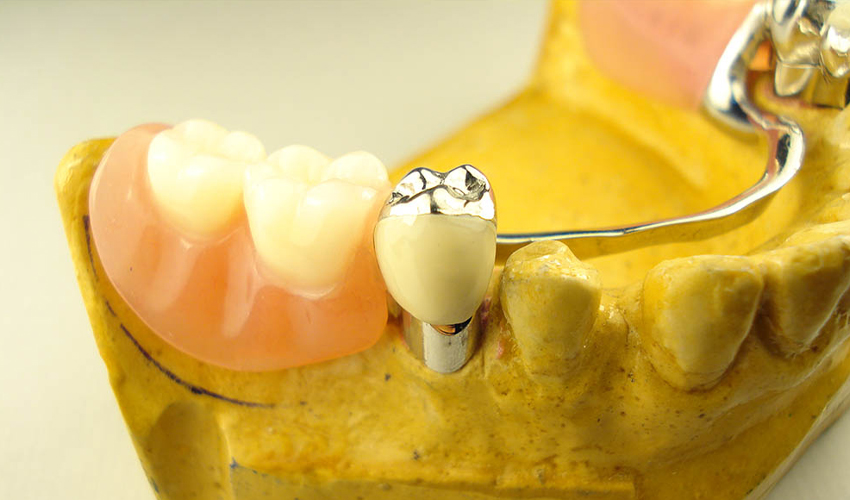
A telescopic denture is a special type of removable denture supported by suitable remaining natural teeth or, in some cases, dental implants. Unlike conventional clasp-retained removable dentures, the components that provide retention are largely incorporated within the prosthesis.
The main characteristic of a telescopic denture is its two-part, interlocking structure. Inner crowns are placed over the teeth selected to support the denture. The removable prosthesis contains corresponding outer components that fit over these crowns. When the denture is inserted, these two components engage with each other, contributing to the retention and stability of the prosthesis.
At Dentsmile Oral and Dental Health Clinic, when planning telescopic denture treatment in Üsküdar, we evaluate the number and position of the remaining teeth, their bone and periodontal support, jaw structure, and the patient’s expectations together.
Who Is Suitable for a Telescopic Denture?
Telescopic dentures may be considered particularly for patients who have only a limited number of natural teeth remaining but whose existing teeth can still be preserved.
When the remaining teeth are not distributed appropriately for a conventional fixed bridge, or when multiple teeth are missing, a telescopic denture may be one of the available treatment options.
However, not every remaining tooth can be used to support a telescopic denture. The root structure, bone support, mobility, and periodontal health of the teeth should be carefully evaluated before treatment.
The aim is to preserve the remaining natural teeth whenever possible while using them to provide support and retention for the prosthesis.
How Is a Telescopic Denture Made?
During the first stage of treatment, the natural teeth that are planned to support the denture are evaluated, and any necessary dental treatment is completed.
Suitable teeth are prepared, and the inner components of the telescopic crowns are placed over them. Corresponding outer components are incorporated into the removable denture.
When the denture is inserted into the mouth, the inner and outer crowns fit over one another. This system allows the prosthesis to obtain support from the natural teeth and helps provide more controlled stability within the mouth.
During treatment, the bite relationship, color and shape of the artificial teeth, speech, chewing function, and compatibility of the denture with the oral tissues are evaluated.
Advantages of Telescopic Dentures
One of the important characteristics of telescopic dentures is that retention can be achieved without the visible metal clasps commonly found in conventional removable dentures. This may provide a more aesthetic appearance in suitable cases.
Obtaining support from the remaining natural teeth can contribute to denture stability. The aim is to distribute chewing forces more evenly between the supporting teeth and oral tissues.
The fact that the patient can remove the telescopic denture also provides an advantage in terms of cleaning.
Another important feature is that, in some appropriately planned cases, the existing denture may potentially be modified if one of the supporting teeth is lost in the future. Whether this is possible depends on the design of the prosthesis and the changes that occur within the mouth.
What Is the Difference Between a Telescopic Denture and a Removable Partial Denture?
Both are removable prostheses that can be inserted and removed by the patient. One of the main differences is how retention is obtained from the remaining natural teeth.
Conventional removable partial dentures generally use metal clasps that engage the natural teeth. In telescopic dentures, retention is achieved through the fit between the inner crowns placed over the natural teeth and the corresponding outer components incorporated into the prosthesis.
For this reason, telescopic dentures may not require externally visible metal clasps.
However, this does not mean that a telescopic denture is more appropriate than a conventional removable partial denture for every patient. The most suitable prosthesis should be selected according to the condition and distribution of the remaining teeth and the overall treatment plan.
Cleaning and Maintenance of Telescopic Dentures
Daily cleaning is important for maintaining the health and function of a telescopic denture over the long term.
The removable section should be taken out of the mouth and cleaned appropriately. The areas around the telescopic crowns remaining in the mouth should also be brushed regularly. Preventing plaque accumulation around the supporting teeth is particularly important.
If the denture begins to lose retention, becomes more mobile, causes pressure sores, or sensitivity develops in the supporting teeth, a dental examination should be arranged.
During regular check-ups, both the fit of the removable denture and the health of the natural teeth and gums supporting the prosthesis are evaluated.
Telescopic Denture Treatment in Üsküdar
At Dentsmile Oral and Dental Health Clinic, our priority when providing telescopic denture treatment in Üsküdar is to carefully evaluate natural teeth that can potentially be preserved.
Particularly in patients who have lost multiple teeth but still have natural teeth capable of supporting a prosthesis, telescopic dentures, conventional removable partial dentures, precision attachment dentures, and, when appropriate, implant-supported options can be evaluated together.
Our primary objective is to provide a prosthesis that preserves the remaining natural teeth whenever possible, can be cleaned comfortably, provides adequate support and retention during chewing, and can be used comfortably by the patient in daily life.