
TMJ Treatments
TMJ Disorders
What Are Temporomandibular Joint Disorders? TMJ Treatment in Üsküdar. Comprehensive information about TMJ Disorders, treatment steps and FAQs — Dentsmile.
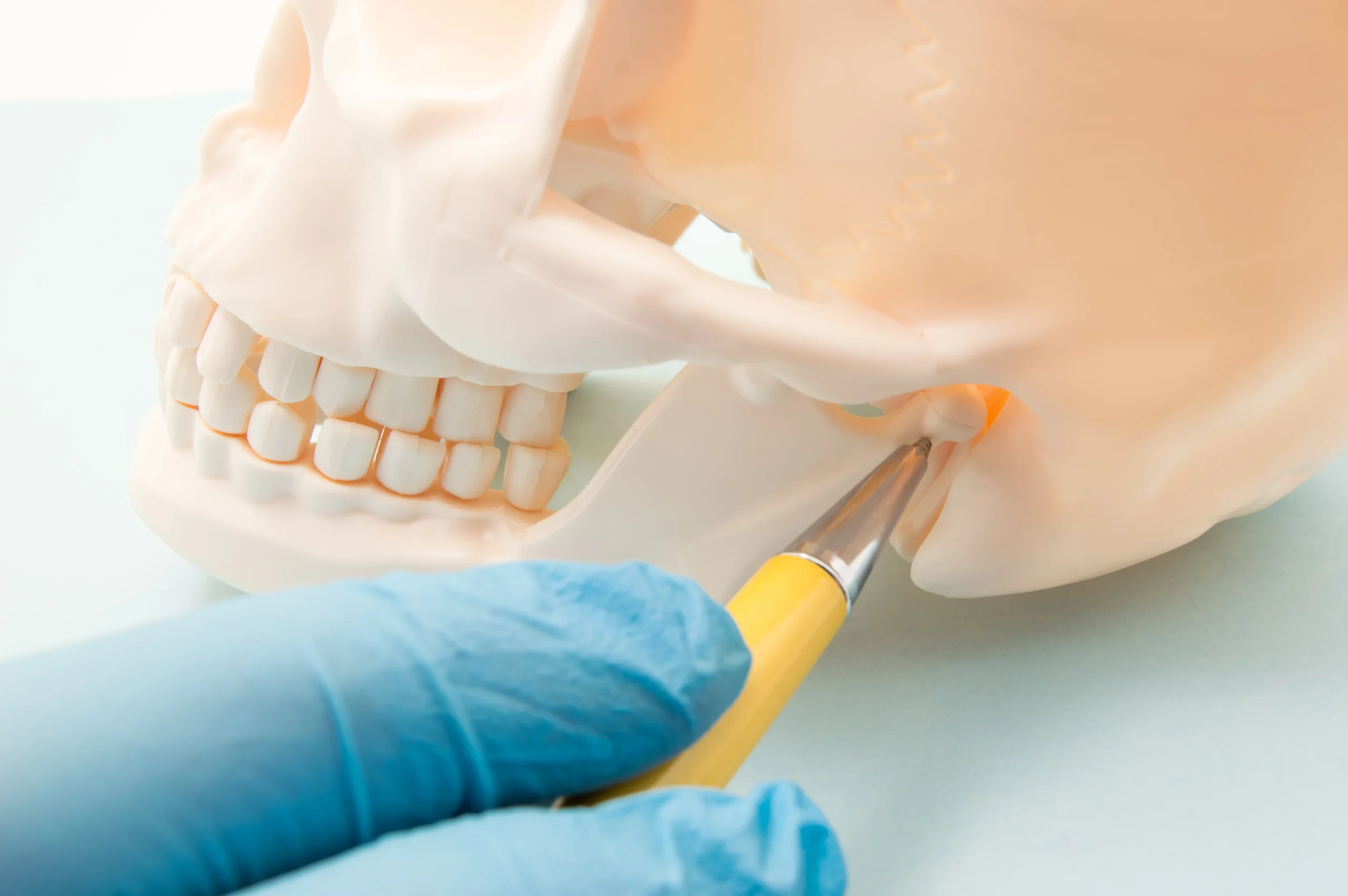
Temporomandibular joint disorders (TMD) include problems affecting the temporomandibular joint (TMJ), which connects the lower jaw to the skull, as well as the chewing muscles and related tissues. The temporomandibular joint is a highly mobile joint that is continuously involved in speaking, chewing, yawning, and opening and closing the mouth.
Patients with temporomandibular joint problems may experience more than just pain around the joint. Symptoms may also include tenderness in the chewing muscles, limited mouth opening, clicking or other sounds from the jaw, and pain in the facial area.
At Dentsmile Oral and Dental Health Clinic, when planning TMJ treatment in Üsküdar, we evaluate not only the area where pain is felt but also jaw movements, chewing muscles, joint sounds, the bite, and the history of the patient’s symptoms.
Symptoms of Temporomandibular Joint Disorders
Temporomandibular joint disorders may present with different symptoms from one patient to another.
Some of the most common complaints include:
Pain in or around the temporomandibular joint
Pain or tenderness while chewing
Limited mouth opening
Deviation of the jaw to one side while opening or closing the mouth
Clicking, popping, or grinding sounds from the jaw
Occasional locking of the jaw
Tension in the chewing muscles
Pain in the face or temple area
Some patients may experience fatigue or tension in the jaw muscles, particularly upon waking in the morning. This may be associated with habits such as clenching or grinding the teeth during sleep.
However, it is not correct to assume that every headache or pain in the face or around the ear originates from the temporomandibular joint. Pain caused by other conditions may occur in similar areas, making differential diagnosis important.
Is Clicking or Popping in the Jaw a Sign of Disease?
One of the most common reasons patients seek evaluation is a “clicking” or “popping” sound when opening the mouth or eating.
Inside the temporomandibular joint is a structure called the articular disc, which helps coordinate joint movement. Certain changes in the movement or position of this disc may cause clicking sounds during opening and closing of the mouth.
However, not every jaw sound requires treatment.
Some joint sounds that have been present for a long time and do not cause pain or restricted movement may simply be monitored.
If the sound is accompanied by pain, jaw locking, reduced mouth opening, or significant changes in jaw movement, a more detailed evaluation is required.
What Causes Temporomandibular Joint Disorders?
Temporomandibular joint disorders do not always have a single cause. In many patients, several factors may contribute to the development of symptoms.
Teeth clenching and grinding, overuse of the chewing muscles, prolonged gum chewing, certain types of trauma, and changes within the joint itself may all contribute to symptoms.
Stress may be associated with increased clenching and muscle activity in some patients, but it is not appropriate to attribute all temporomandibular joint problems solely to stress.
Changes in the position of the articular disc, degenerative changes in the joint surfaces, and certain rheumatologic conditions may also affect the temporomandibular joint.
For this reason, before beginning treatment, it is important to determine whether the problem primarily originates from the joint, the chewing muscles, or a combination of both.
How Is a TMJ Examination Performed?
During the examination, we first evaluate when the patient’s symptoms began, which activities increase the pain, and whether there has been any previous jaw locking or trauma.
The range of mouth opening is measured, and the opening and closing movements of the lower jaw are examined. The temporomandibular joints and chewing muscles are assessed for pain and tenderness.
The movements during which joint sounds occur are also evaluated.
Advanced imaging is not required for every patient. When necessary, radiographic methods or 3D imaging may be used to assess the bony structures.
In selected cases where a detailed assessment of the articular disc and other soft tissues is required, magnetic resonance imaging (MRI) may be recommended.
How Are Temporomandibular Joint Disorders Treated?
TMJ treatment should be planned according to the underlying source of the patient’s symptoms. There is no single standard treatment that is appropriate for every patient.
For many temporomandibular joint problems, reversible and non-surgical treatments are preferred as the initial approach.
Depending on the patient’s condition, treatment options may include:
Reducing habits that place excessive strain on the temporomandibular joint
Following a softer diet for a limited period
Exercises for the chewing muscles
Physical therapy when necessary
Medication prescribed when considered appropriate by the clinician
Occlusal splints (night guards)
The aim of treatment is not simply to provide temporary pain relief, but also to control, as much as possible, the factors that contribute to increased stress on the temporomandibular joint and chewing muscles.
Are Night Guards Used in TMJ Treatment?
A night guard or occlusal splint may be used as part of TMJ treatment in appropriate patients.
In some patients who clench or grind their teeth, an occlusal splint may help protect the teeth from wear and assist in managing the forces placed on the chewing system.
However, it is not appropriate to automatically provide a night guard to every patient who experiences jaw sounds or jaw pain.
The type and thickness of the splint, whether it is placed on the upper or lower jaw, and how it is adjusted to the patient’s bite should be determined according to the individual treatment plan. An improperly designed appliance used for a prolonged period without professional monitoring may cause unwanted changes in the bite.
For this reason, occlusal splints should be prepared under professional supervision and regularly monitored.
Jaw Locking
Some patients may experience a sensation of the jaw becoming stuck at a certain point while opening the mouth or a significant reduction in their ability to open the mouth.
Less commonly, a patient may have difficulty closing the mouth.
Because jaw locking can have different causes, patients should not attempt to force the jaw back into position themselves.
Early evaluation is particularly important when jaw locking develops suddenly and does not resolve.
Is Surgery Necessary for Temporomandibular Joint Disorders?
For most temporomandibular joint disorders, surgery is not the first treatment option.
Treatment generally begins with conservative approaches appropriate to the patient’s condition, and the response to treatment is monitored.
For certain intra-articular joint disorders, minimally invasive joint procedures or surgical treatment may be considered when conservative treatments are insufficient. However, this decision should be based on the patient’s clinical findings together with the results of any necessary imaging.
A jaw sound alone is not an indication for surgical treatment.
TMJ Treatment in Üsküdar
At Dentsmile Oral and Dental Health Clinic, before planning TMJ treatment in Üsküdar, we evaluate the temporomandibular joint, chewing muscles, mouth opening, and jaw movements together.
When necessary, imaging methods may be used to determine whether the problem originates from structures within the joint or primarily from the chewing muscles.
Whenever possible, our priority is to use reversible and conservative treatment methods. Depending on the patient’s condition, habit modification, exercises, occlusal splints, and other necessary treatments may be planned together.
Our primary approach is not to treat every jaw sound or episode of pain in the same way, but to identify the source of the symptoms and plan an individualized, conservative TMJ treatment whenever possible.