
Oral and Maxillofacial Surgery
Frenectomy
What Is a Frenectomy? Frenectomy Treatment in Üsküdar. Comprehensive information about Frenectomy, treatment steps and FAQs — Dentsmile.
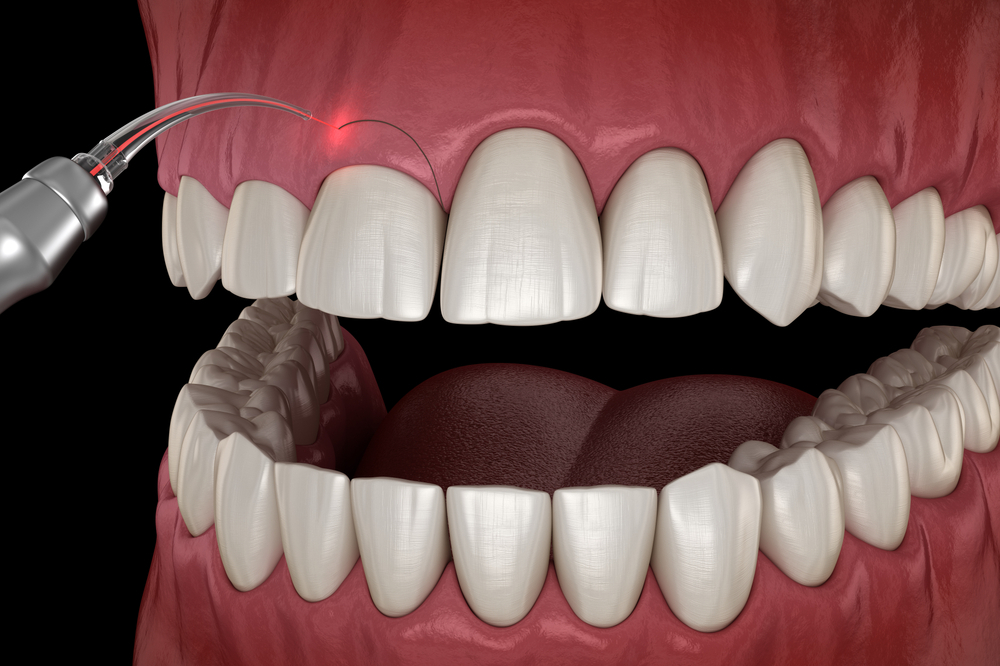
Frenectomy is a surgical procedure performed, when necessary, to modify the soft tissue attachment known as the frenulum, which connects the lips, cheeks, or tongue to the surrounding tissues inside the mouth. It is most commonly performed on the upper or lower lip frenulum or the lingual frenulum located beneath the tongue.
The frenulum is a natural part of oral anatomy, and not every prominent frenulum requires treatment. The decision to perform a frenectomy should not be based solely on the appearance of the tissue. Speech, tongue mobility, gum health, tooth position, and the patient’s functional concerns should all be evaluated.
At Dentsmile Oral and Dental Health Clinic, when planning frenectomy treatment in Üsküdar, we first determine whether the frenulum is actually causing a functional or periodontal problem.
What Is a Lip Tie?
A lip tie refers to the natural soft tissue attachment between the inner surface of the lip and the gums.
In some patients, particularly when the upper lip frenulum is thick or extends between the front teeth, it may be associated with a gap between the two front teeth. If the frenulum exerts excessive pulling force on the gum tissue, the area may also need to be evaluated from a periodontal perspective.
However, the presence of a gap between the front teeth alone does not necessarily mean that a frenectomy is required. Especially in children, natural changes in the spacing between the front teeth may occur as the teeth erupt and the jaws develop.
For this reason, the timing of frenectomy in children is important. Rather than performing an unnecessary or premature procedure, dental development and, when necessary, the orthodontic treatment plan should be evaluated together.
What Is a Tongue Tie?
When the frenulum beneath the tongue significantly restricts tongue movement, the condition is known as ankyloglossia, commonly referred to as tongue tie.
The visible presence of a lingual frenulum alone is not an indication for treatment. What matters is the extent to which tongue mobility and function are affected.
In some patients, the ability to lift or extend the tongue may be restricted. In infants, this may be associated with feeding difficulties, while in older children and adults it may, in certain cases, affect speech and other oral functions.
Particularly when an infant has breastfeeding difficulties, tongue tie should not automatically be assumed to be the sole cause. The infant, the mother, and breastfeeding function should be evaluated as a whole.
When May a Frenectomy Be Performed?
The need for a frenectomy is determined according to the patient’s age and the problems caused by the frenulum.
Treatment may be considered in situations such as:
Significant functional impairment caused by the frenulum
Restricted tongue movement
Feeding or speech functions being affected in appropriate cases
Continuous pulling of the gum tissue by the lip frenulum
Certain conditions associated with orthodontic treatment
Frenulum attachments that interfere with denture use or denture stability
The same approach is not appropriate for every patient. In some cases, monitoring without any surgical intervention may be sufficient.
How Is a Frenectomy Performed?
A frenectomy is generally a relatively short procedure, and the appropriate type of anesthesia is selected according to the patient’s age and the procedure being performed.
The frenulum is carefully released to reduce the tension or restriction of movement caused by the tissue. Depending on the extent of the procedure, sutures may be placed in the treated area.
A frenectomy can be performed using conventional surgical techniques, while laser-assisted techniques may also be used in suitable cases.
The use of a laser is not necessary for every patient, nor does it automatically mean that better results will be achieved. The appropriate technique should be selected according to the structure of the frenulum, the treatment area, the patient’s age, and the dentist’s treatment plan.
Recovery After a Frenectomy
Mild pain, tenderness, or swelling may occur in the treated area after a frenectomy. These symptoms usually decrease during the healing process.
During the first few days, patients may be advised to avoid very hot, hard, or sharp foods that could irritate the treated area. Maintaining good oral hygiene is important, but care of the surgical site should be performed according to the dentist’s instructions.
Following tongue-tie treatment, tongue function may need to be reassessed in some patients. If there is a functional problem related to speech, evaluation in collaboration with the relevant healthcare professionals may be recommended when necessary.
Does a Frenectomy Close the Gap Between the Teeth?
In some patients whose upper lip frenulum extends between the two front teeth, the lip tie may be associated with a gap known as a diastema.
However, a frenectomy alone does not always close the gap between the teeth.
The cause of the spacing between the front teeth and the patient’s stage of dental development should be evaluated. In patients who require orthodontic treatment, the timing of the frenectomy—whether before, during, or after orthodontic treatment—should be determined individually.
Therefore, performing a frenectomy simply because there is a visible gap between the teeth is not an appropriate approach.
Frenectomy Treatment in Üsküdar
At Dentsmile Oral and Dental Health Clinic, when planning frenectomy treatment in Üsküdar, we focus primarily on the functional effects of a lip or tongue tie rather than its appearance alone.
In children, dental development and orthodontic status are considered; in adults, periodontal tissues and prosthetic needs are evaluated; and in patients with tongue tie, tongue mobility and function are assessed together.
When treatment is necessary, conventional surgical techniques or, in suitable cases, laser-assisted frenectomy may be considered.
Our fundamental approach is not to treat every prominent lip or tongue frenulum, but to plan treatment at the appropriate time and with the appropriate technique when the frenulum is genuinely causing a functional or periodontal problem.