
TMJ Treatments
Jaw Locking
What Is Jaw Locking? Jaw Locking Treatment in Üsküdar. Comprehensive information about Jaw Locking, treatment steps and FAQs — Dentsmile.
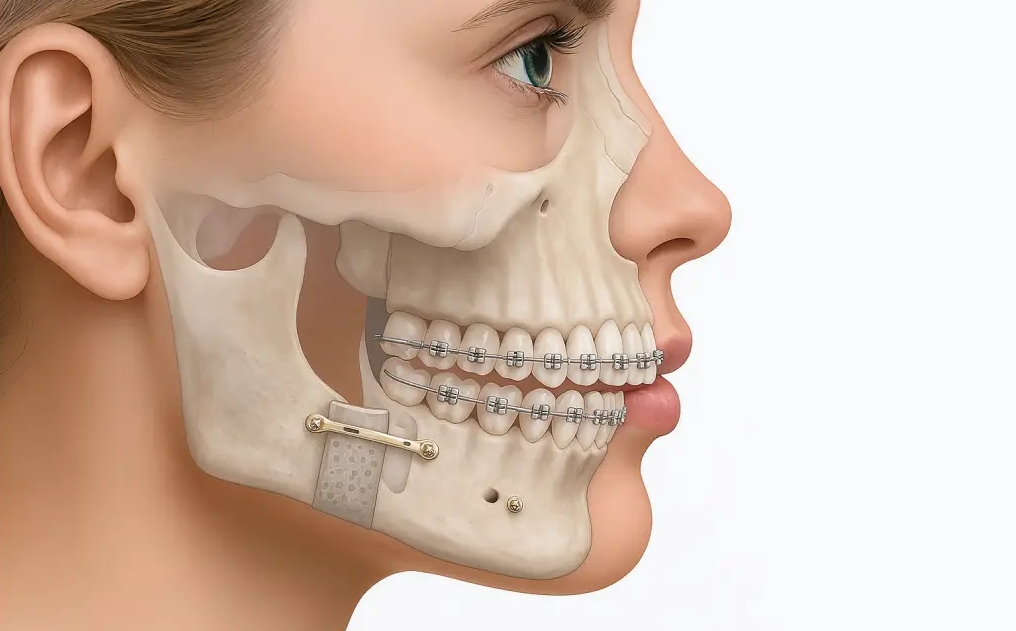
Jaw locking is a condition in which the normal opening or closing movement of the lower jaw becomes restricted, making it difficult for the patient to open the mouth comfortably or to close the mouth once it is open. Different problems involving the temporomandibular joint, articular disc, and chewing muscles may cause jaw locking.
In some patients, mouth opening gradually becomes more limited over time, while in others the locking may occur suddenly. In a patient who previously experienced clicking sounds from the jaw, a sudden disappearance of the clicking accompanied by reduced mouth opening may also indicate a problem involving the articular disc.
At Dentsmile Oral and Dental Health Clinic, when planning jaw locking treatment in Üsküdar, we first determine the type and underlying cause of the locking. This is important because the problem in a patient who cannot open the mouth may be different from that of a patient who cannot close it, and the treatment approaches may also differ.
Why Does the Jaw Lock?
One of the most commonly evaluated causes of jaw locking involves problems related to the articular disc and other structures within the temporomandibular joint (TMJ).
The articular disc within the temporomandibular joint normally moves in coordination with the joint surfaces during movements of the lower jaw. In some cases, when the disc shifts from its normal position, jaw movement may become restricted.
Other possible causes include:
Temporomandibular joint disorders
Spasm of the chewing muscles
Teeth clenching and grinding
Trauma to the jaw area
Inflammation within the joint
Keeping the mouth open for an extended period
Muscle tension following certain dental procedures
Degenerative changes in the temporomandibular joint
Infections around wisdom teeth and certain infections of the oral and maxillofacial region may also cause restricted mouth opening known as trismus. Therefore, not every problem involving limited mouth opening originates directly from the temporomandibular joint.
Difficulty Opening the Mouth
Difficulty opening the mouth to its normal range is one of the conditions most commonly described by patients as “my jaw is locked.”
In some patients, the mouth opens to a certain point but cannot open any further. This may be accompanied by pain and deviation of the jaw to one side.
In certain cases where the articular disc is displaced forward and does not return to its normal position during mouth opening, a condition commonly referred to as a closed lock may occur.
However, reduced mouth opening does not always indicate a disc-related problem. Muscle spasm, infection, trauma, and other jaw conditions may cause similar symptoms.
Inability to Close the Mouth
Another form of jaw locking occurs when the patient can open the mouth but is unable to close it again.
Particularly after wide yawning, keeping the mouth open for a prolonged period, or during certain dental procedures, the head of the lower jaw may move beyond its normal range of motion, resulting in a mandibular dislocation.
In this situation, the patient may have difficulty closing the mouth, and speaking and swallowing may become difficult, causing significant discomfort.
Patients should not attempt to force the jaw back into position or use techniques found online. Professional assessment is required.
How Is Jaw Locking Diagnosed?
During the examination, we first determine when the problem began and whether the patient is having difficulty opening or closing the mouth.
The range of mouth opening is measured, the opening and closing movements of the jaw are observed, and the temporomandibular joints and chewing muscles are examined.
We also assess whether there were previous joint sounds, whether the locking has occurred repeatedly, whether the patient has a teeth-clenching habit, and whether there has been any recent trauma.
Imaging is not necessary for every patient. When the bony structures need to be evaluated, radiographic or 3D imaging methods may be used.
When a detailed assessment of the articular disc and other soft tissues is required, magnetic resonance imaging (MRI) may be preferred.
How Is Jaw Locking Treated?
Treatment varies depending on the cause of the locking.
For muscle-related problems, approaches aimed at reducing strain on the jaw muscles, appropriate exercises, physical therapy, or medication when necessary may be considered.
In suitable patients with accompanying teeth clenching or grinding, an occlusal splint (night guard) may form part of the treatment. However, a night guard is not required in every case of jaw locking.
For problems related to the articular disc, treatment may begin with conservative approaches depending on the patient’s clinical findings. If certain intra-articular problems persist despite treatment, more advanced interventions may be considered.
The approach to a jaw dislocation is different. The displaced joint must be returned to its appropriate position, and this should be performed by a healthcare professional.
When restricted mouth opening is caused by an infection, the source of the infection must first be identified and treated accordingly.
When Does Jaw Locking Require Prompt Evaluation?
Sudden jaw locking that does not resolve should be evaluated without unnecessary delay.
Prompt medical or dental assessment is particularly important if:
The mouth remains open and cannot be closed
Jaw movement becomes restricted following trauma
Severe pain is present
There is rapidly increasing swelling of the face or jaw
Fever is present
Difficulty swallowing or breathing develops
Symptoms such as difficulty swallowing or breathing may require urgent medical evaluation.
Can Jaw Locking Recur?
The likelihood of jaw locking recurring depends on its underlying cause.
The follow-up and treatment approach for a patient with recurrent jaw dislocation will differ from that of a patient with an articular disc problem or restriction caused by the chewing muscles.
For this reason, rather than simply relieving the locking temporarily, it is important to determine why the problem is recurring.
Habits that place excessive strain on the temporomandibular joint, teeth clenching or grinding, and the structure of the joint can be evaluated together when developing a long-term treatment plan.
Jaw Locking Treatment in Üsküdar
At Dentsmile Oral and Dental Health Clinic, before planning jaw locking treatment in Üsküdar, we evaluate whether the problem originates from the temporomandibular joint, articular disc, chewing muscles, or another condition affecting the oral and maxillofacial region.
When necessary, radiographic examinations, 3D imaging, or MRI may be used.
Depending on the patient’s condition, treatment may include conservative measures to protect the temporomandibular joint, exercises and physical therapy, occlusal splints, or more advanced joint treatments when necessary.
Our primary approach is not simply to restore jaw movement, but to identify the cause of the locking, protect the joint and muscular structures, and develop a treatment plan aimed at reducing the risk of recurrence as much as possible.