Oral and Maxillofacial Surgery
Impacted Tooth Surgery
What Is an Impacted Tooth? Impacted Tooth Treatment in Üsküdar. Comprehensive information about Impacted Tooth Surgery, treatment steps and FAQs — Dentsmile.
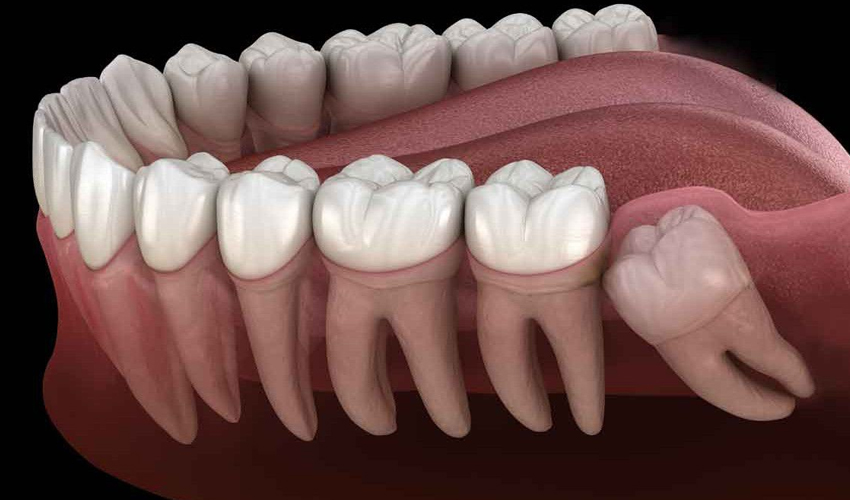
An impacted tooth is a tooth that has not reached its expected position in the mouth despite completion of its normal eruption period and development, remaining partially or completely beneath the gum tissue or within the jawbone. Wisdom teeth are the most commonly impacted teeth, although canine teeth and, less frequently, other teeth may also remain impacted.
There is no single reason why a tooth becomes impacted. Insufficient space in the jaw, an unfavorable eruption direction, the position of neighboring teeth, and genetic or developmental factors may all contribute to this condition.
At Dentsmile Oral and Dental Health Clinic, when planning impacted tooth treatment in Üsküdar, we consider not only whether the tooth is impacted but also its position, its relationship with neighboring teeth, the surrounding bone structure, and whether it is causing any problems.
What Are the Symptoms of an Impacted Tooth?
Impacted teeth do not always cause symptoms. In some patients, they may remain within the jawbone for years without causing any complaints and may only be discovered during routine radiographic examinations.
When an impacted tooth causes problems, symptoms may include:
Pain in the tooth or jaw area
Redness and swelling of the gums
Tenderness or limited mouth opening
An unpleasant taste in the mouth
Bad breath
Bleeding gums
Swelling around the jaw
Recurrent gum infections
Particularly with partially impacted wisdom teeth, bacteria and food debris may accumulate beneath the gum tissue partially covering the tooth, leading to an inflammatory condition known as pericoronitis.
Does Every Impacted Tooth Need to Be Removed?
Not every impacted tooth needs to be removed.
Some impacted teeth that do not cause disease or damage surrounding anatomical structures may be monitored through regular clinical and radiographic examinations.
However, surgical removal may be considered when there are recurrent infections, damage to neighboring teeth, untreatable decay, cysts, or other pathological conditions.
The approach may be different for impacted canine teeth. In suitable cases, rather than removing the tooth, it may be surgically exposed and guided into its correct position in the mouth with orthodontic treatment.
For this reason, the treatment decision for an impacted tooth is not simply a choice between “removal” and “no removal.” Different treatment options should be considered according to the type and position of the impacted tooth.
How Is an Impacted Tooth Evaluated?
A clinical examination and radiographic imaging are performed before treatment.
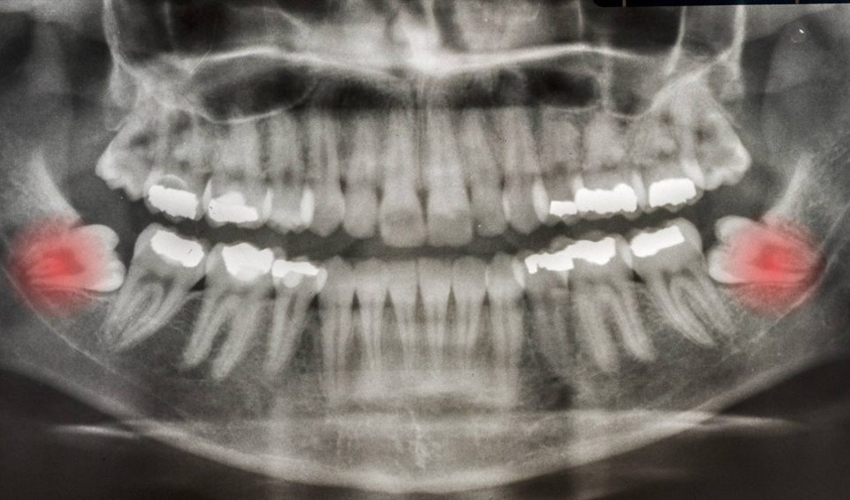
A panoramic X-ray can help evaluate the general position of most impacted teeth. However, in some cases, a two-dimensional image may not provide sufficient information for surgical planning.
Particularly when the roots of an impacted lower wisdom tooth are close to the nerve canal, or when a more detailed assessment of the relationship between the impacted tooth, neighboring teeth, and other anatomical structures is required, 3D dental tomography (CBCT) may be used.
This evaluation helps determine how the surgical procedure should be performed and allows patient-specific risks to be assessed.
How Is Impacted Tooth Surgery Performed?
Impacted tooth surgery is generally performed under local anesthesia.
Depending on the position of the tooth, the gum tissue is carefully opened. If the tooth is partially or completely located within the jawbone, the necessary amount of bone may be removed to gain access to it.
Particularly with impacted wisdom teeth, if removing the tooth in one piece would require excessive force on the surrounding tissues, the tooth may be carefully divided into sections and removed in smaller pieces.
After the tooth has been removed, the surgical area is cleaned and sutures may be placed when necessary.
The extent of surgery depends on the depth and angle of the impacted tooth, its root structure, and its relationship with surrounding anatomical structures.
Medications Before Impacted Tooth Surgery
It is important for patients to inform their dentist about all medications they are taking and any existing medical conditions before impacted tooth surgery.
In particular, aspirin, anticoagulants, antiplatelet medications, and other medications that affect bleeding should not be stopped by the patient without medical advice.
Stopping these medications may create serious health risks for some patients. If any medication changes are necessary, the decision should be made after evaluating the patient’s medical condition and, when appropriate, in coordination with the relevant physician.
What Can Be Expected After Impacted Tooth Surgery?
A certain degree of pain, swelling, and temporary limitation in mouth opening may occur after surgical extraction. The severity of these symptoms varies depending on the extent of the procedure and the patient’s individual healing response.
Swelling may become more noticeable during the first few days and then gradually begin to decrease.
Some patients may experience temporary difficulty opening the mouth, known as trismus.
Pain that begins several days after the extraction or becomes progressively more severe should be evaluated for alveolar osteitis (dry socket). Smoking is an important factor that can increase the risk of dry socket.
Less commonly, complications such as infection, prolonged bleeding, damage to neighboring teeth, or problems involving nearby anatomical structures may occur.
When an impacted lower wisdom tooth is located very close to the nerve canal, the risk of affecting nerves associated with sensation in the lower lip, chin, or tongue should also be evaluated. For this reason, 3D imaging may be particularly important before surgery in selected cases.
Care After Impacted Tooth Surgery
Patients should follow the dentist’s instructions regarding postoperative care and medication use.
During the first few hours, protecting the blood clot that forms at the extraction site is important. Vigorous rinsing, frequent spitting, or touching the surgical area with the tongue may negatively affect healing.
During the first few days, patients may be advised to avoid very hot or hard foods and choose softer foods instead.
Because smoking may negatively affect healing, avoiding tobacco products is particularly important during the early postoperative period.
The dentist should be contacted if uncontrolled bleeding, increasing swelling, fever, worsening pain, discharge, or difficulty swallowing or breathing develops.
Impacted Tooth Treatment in Üsküdar
At Dentsmile Oral and Dental Health Clinic, before planning impacted tooth treatment in Üsküdar, we carefully evaluate the position of the tooth and the surrounding anatomical structures.
When necessary, panoramic X-rays and 3D dental tomography are used to examine the relationship between the impacted tooth, neighboring teeth, bone tissue, and the nerve canal.
We do not automatically plan surgical extraction for every impacted tooth. Monitoring may be appropriate for teeth that are not causing problems, orthodontic treatment may be considered for suitable impacted canine teeth, and surgical treatment may be planned when extraction is necessary.
Our primary approach is to evaluate the impacted tooth together with the surrounding anatomical structures, determine the most appropriate treatment for the individual patient, and preserve healthy teeth whenever possible.