
Prosthetic Dentistry
Removable Denture
What Are Removable Dentures? Removable Denture Treatment in Üsküdar. Comprehensive information about Removable Denture, treatment steps and FAQs — Dentsmile.
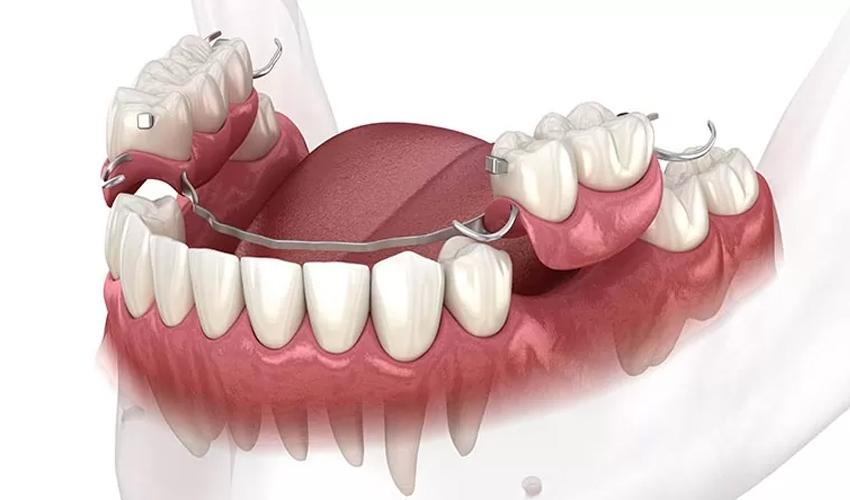
A removable denture is a dental prosthesis designed to restore the function and appearance of missing teeth when multiple or all teeth have been lost. Unlike fixed restorations, removable dentures can be taken out of the mouth and reinserted by the patient. Complete dentures may be used when no natural teeth remain, while partial dentures may be considered when some natural teeth are still present.
Tooth loss is not merely an aesthetic concern. As the number of missing teeth increases, chewing function, speech, and nutrition may also be affected. Particularly in patients who have lost many teeth, the condition of the remaining teeth and jaw structure directly influences which prosthetic treatment options can be considered.
At Dentsmile Oral and Dental Health Clinic, when planning removable denture treatment in Üsküdar, we do not consider only the number of missing teeth. The health of the remaining teeth, jawbone structure, gum tissues, bite relationship, and the patient’s expectations from the denture are evaluated together.
When Are Removable Dentures Used?
Today, advances in dental implants and fixed prosthetic treatments have made it possible to manage missing teeth using several different approaches. Nevertheless, removable dentures remain an important treatment option, particularly for patients who have lost many or all of their teeth.
Removable dentures may be considered:
When all natural teeth have been lost
When multiple teeth are missing
When there are insufficient or unsuitable supporting teeth for a fixed bridge
In certain cases where implant treatment cannot be performed
When the patient does not prefer surgical treatment
When a temporary or transitional prosthesis is required
It is important to evaluate the available treatment options together. A conventional removable denture may be sufficient for some patients, while in others dental implants can be used to improve denture retention and stability.
Types of Removable Dentures
Removable dentures can be designed in different ways depending on the number and position of the remaining natural teeth and the condition of the supporting tissues.
Complete Dentures
A complete denture is a removable prosthesis used when no natural teeth remain in the upper or lower jaw. It is also commonly known as a full denture or false teeth.
Complete dentures are designed to obtain support from the gums and underlying jawbone. In the upper jaw, the palate can also contribute to retention, which may make stability more favorable in many patients.
In the lower jaw, the tongue, cheeks, floor of the mouth, and anatomical structure of the jawbone have a greater influence on denture stability. Movement of the lower denture is more commonly encountered, particularly in patients who have been without teeth for many years and have experienced significant bone loss.
Removable Partial Dentures
A removable partial denture may be used when some natural teeth remain but the missing teeth cannot be appropriately replaced with a fixed bridge.
These dentures obtain support from both the remaining natural teeth and the oral tissues. Conventional partial dentures may use clasps attached to natural teeth to improve retention.
The denture design should be individualized according to the number and location of the missing teeth. The objective is not only to achieve adequate retention but also to distribute forces on the remaining natural teeth in a balanced manner.
Precision Attachment Dentures
In suitable cases, precision attachment systems may be used to reduce the visibility of conventional metal clasps.
Sometimes referred to as attachment-retained dentures, these systems can be designed so that the components responsible for retaining the denture are less visible.
For a precision attachment denture to be considered, suitable natural teeth with adequate support must be present in appropriate positions within the mouth.
Implant-Supported Removable Dentures
In completely edentulous patients, movement of the lower denture can create a significant functional problem.
In suitable patients, dental implants placed in the jawbone can be used to improve the retention of a removable denture.
These dentures can still be removed by the patient for cleaning but may provide more controlled retention than conventional complete dentures.
Implant-supported removable dentures are one of the options that may be considered when fixed implant-supported restorations are not suitable or when a removable solution is preferred.
How Is Removable Denture Treatment Performed?
Before treatment begins, the remaining teeth, gums, and jawbones are evaluated. If there are cavities, gum disease, or teeth requiring extraction, these conditions are addressed as part of the preliminary treatment plan.
Impressions are then taken to create records of the jaws and supporting tissues.
Preparing a denture involves more than simply placing artificial teeth in the spaces left by missing teeth. The relationship between the upper and lower jaws, bite, tooth size and shape, lip support, speech, and smile line should all be evaluated together.
Particularly with complete dentures, correct positioning of the teeth is important for maintaining denture balance. A denture that appears aesthetically pleasing but loses stability during chewing cannot be considered successful.
After the necessary trial stages have been completed, the denture is finalized and its fit within the mouth is evaluated.
Adapting to and Using Removable Dentures
Adapting to a new removable denture requires some time. During the first few days, it is normal for the denture to feel like a foreign object in the mouth.
Initially, patients may experience increased saliva production, temporary changes in speech, difficulty chewing, or a feeling of fullness involving the cheeks and tongue. The oral tissues and muscles gradually adapt to the new denture.
During the initial period, taking smaller bites and choosing relatively soft foods may make adaptation easier. Particularly with complete dentures, chewing as evenly as possible on both sides can help improve denture stability.
Denture retention is not the same for every patient. The shape and volume of the jawbone, condition of the oral mucosa, characteristics of saliva, movements of the tongue and cheeks, and the fit of the denture to the tissues can all influence retention.
Particularly in patients who have been without teeth for many years, gradual loss of jawbone volume may cause the denture to become more mobile.
New dentures may also create pressure points or sore areas in certain locations. In such cases, patients should not attempt to cut, file, or modify the denture themselves. Pressure areas should be identified by the dentist, who can then make the necessary adjustments.
Advantages and Limitations of Removable Dentures
When properly planned, removable dentures can replace multiple missing teeth within a single restoration. In completely edentulous patients, they can help restore chewing function, support speech, and partially restore the support lost from the lips and cheeks.
Because they can be removed by the patient, the dentures themselves can be cleaned directly. They also represent an important treatment alternative for certain patients who cannot undergo implant treatment or extensive fixed prosthetic treatment.
However, removable dentures do not provide exactly the same sensation as natural teeth or appropriately planned fixed restorations.
An adaptation period may be necessary. Particularly in completely edentulous patients with advanced bone loss, the denture may move during speaking or chewing. Changes in the oral tissues over time can also reduce the retention of a denture that previously fitted well.
For this reason, removable dentures should be checked periodically.
Care and Cleaning of Removable Dentures
Regular cleaning of removable dentures is important for both the lifespan of the prosthesis and the health of the oral tissues.
After removal from the mouth, the denture should be cleaned using an appropriate denture brush. Care should be taken to prevent the denture from being dropped and fractured during cleaning. Because uncontrolled use of abrasive products can scratch the denture surface, cleaning products suitable for dentures should be preferred.
Patients with partial dentures should carefully clean not only the denture but also the natural teeth remaining in the mouth. Plaque control is particularly important in areas where the denture comes into contact with natural teeth.
We generally do not recommend keeping removable dentures in the mouth throughout the night. Removing the denture during sleep allows the oral tissues covered by the denture during the day to rest. However, the dentist may provide different instructions in specific situations, such as after a surgical procedure or immediately after delivery of a new denture.
When removed, the denture should be stored under appropriate conditions, and cleaning of the oral tissues should not be neglected.
Fit and Lifespan of Removable Dentures
It is not appropriate to give a fixed lifespan for removable dentures that applies to every patient.
Even if the denture material remains structurally intact, the tissues within the mouth continue to change over the years. In particular, changes in jawbone volume following tooth loss can affect how well the denture fits.
This may result in more food accumulating beneath the denture, increased denture movement, pressure sores, or loss of stability during chewing.
When these changes occur, continuously using denture adhesive to compensate for the problem is not an appropriate substitute for having the denture fit evaluated.
When necessary, an existing denture may be relined or otherwise adjusted. If significant changes have occurred in the oral anatomy, a new denture may need to be prepared.
During regular check-ups, not only denture retention but also the oral tissues, remaining natural teeth, and bite relationship should be evaluated.
Choosing Between Removable Dentures, Fixed Prostheses, and Dental Implants
Removable dentures, fixed bridges, and dental implant treatments should not always be considered completely separate options for managing missing teeth.
In some patients, existing natural teeth can support a fixed bridge. In others, dental implants may be placed in the areas of missing teeth to support fixed restorations. When multiple teeth are missing or the patient is completely edentulous, a removable denture may be more appropriate.
Dental implants are not used exclusively to provide fixed teeth. They can also be used to improve the retention of removable dentures in completely edentulous patients.
The appropriate treatment option should therefore be determined by evaluating the number of missing teeth, condition of the remaining teeth, available bone volume, general health, and the patient’s expectations together.
Removable Denture Treatment in Üsküdar
At Dentsmile Oral and Dental Health Clinic, when planning removable denture treatment in Üsküdar, we first evaluate the condition of the remaining natural teeth, gums, and jawbone.
For completely edentulous patients, implant-supported removable or fixed prosthetic options may also be considered alongside conventional complete dentures when clinically appropriate. In cases of partial tooth loss, preserving the remaining natural teeth whenever possible and distributing the forces created by the denture appropriately across these teeth are important aspects of treatment planning.
The primary objective of removable denture treatment is not simply to replace the visible appearance of missing teeth. Chewing function, speech, denture stability within the mouth, ease of cleaning, and the patient’s ability to use the denture comfortably in daily life should all be considered together.
Our approach to removable dentures in Üsküdar is to provide a prosthetic treatment suited to the patient’s existing oral and bone anatomy, preserve natural teeth whenever possible, and create a treatment plan that can be appropriately monitored and maintained over the long term.