
Orthodontics
Lingual orthodontics
Comprehensive information about Lingual Braces, treatment steps and FAQs — Dentsmile.
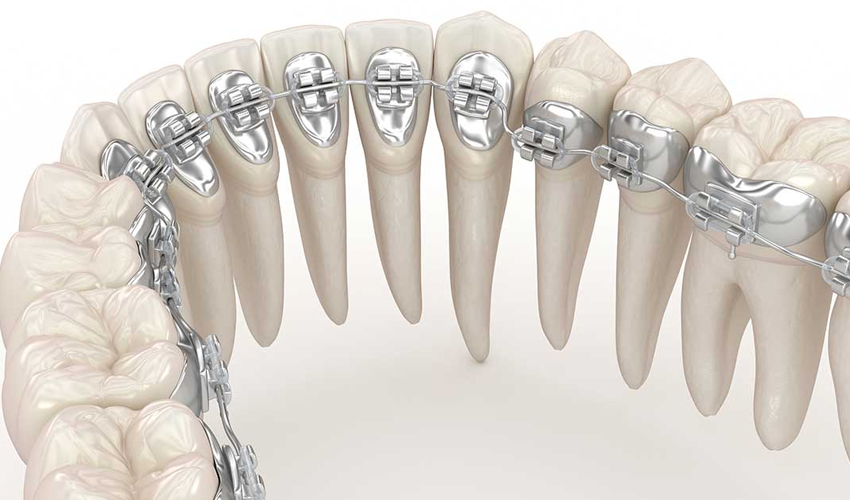
Lingual orthodontics is one of the fixed orthodontic treatment methods used to correct tooth malposition and dental crowding. Unlike conventional braces, the brackets are bonded not to the front surfaces of the teeth but to the inner (lingual) surfaces facing the tongue. Because the brackets and orthodontic archwires are positioned behind the teeth, they are largely hidden from view.
For this reason, lingual orthodontics may be preferred particularly by adult patients who do not want their braces to be visible during orthodontic treatment. Although it offers an important aesthetic advantage, treatment planning, clinical application, and patient adaptation differ in certain respects from conventional labial braces.
Because the brackets are positioned close to the tongue, patients may initially experience a sensation of contact, sensitivity, or irritation of the tongue. Some patients may also notice temporary changes in speech, particularly in the pronunciation of certain sounds. The severity of these effects varies from person to person, and most patients gradually adapt to the brackets over time.
Before treatment begins, the patient’s dental anatomy, bite, type of orthodontic problem, and oral hygiene should be evaluated in detail. Whether lingual orthodontics is suitable for a particular patient should not be determined solely by whether the tongue is likely to be disturbed by the brackets. The entire orthodontic condition must be assessed.
Who Is Suitable for Lingual Orthodontic Treatment?
Lingual orthodontics was not developed exclusively for patients with a particular facial type or specific jaw discrepancy. In appropriately selected cases, it can be used to treat a variety of orthodontic problems.
It may be considered particularly for adolescents and adults who:
Have dental crowding
Have spaces between their teeth
Have irregular tooth positions
Have certain bite problems
Do not want their brackets to be visible during orthodontic treatment
However, not every patient is equally suitable for lingual orthodontics. Dental anatomy, bite pattern, severity of the orthodontic problem, oral hygiene, and the tooth movements required all play an important role in treatment selection.
For certain advanced bite and jaw problems, alternative orthodontic approaches or combined treatments may be more appropriate. The decision to proceed with lingual orthodontics should therefore be made after an orthodontic examination and the necessary radiographic assessment.
What Are the Advantages of Lingual Orthodontic Treatment?
The most important advantage of lingual orthodontics is that it provides a less visible form of fixed orthodontic treatment.
Because the brackets are positioned on the back surfaces of the teeth, they do not create the same visible appearance as conventional metal braces when viewed from the front.
This can make lingual orthodontics an important alternative for patients who:
Do not want visible braces in their professional life
Have aesthetic concerns in social settings
Prefer fixed orthodontic treatment rather than clear aligners
Because the lingual system is fixed, patients do not need to remove and replace the appliance themselves. Unlike clear aligner treatment, treatment progress is therefore not dependent on compliance with a prescribed number of daily wear hours.
What Are the Disadvantages of Lingual Orthodontic Treatment?
Alongside its aesthetic advantages, lingual orthodontics also has certain disadvantages that patients should understand before beginning treatment.
Because the brackets are positioned close to the tongue, temporary tongue sensitivity and irritation may occur during the initial stages of treatment.
Temporary changes in speech and the pronunciation of certain sounds may occur during the first few days. Adaptation time varies from patient to patient.
Some patients may find it more difficult to adapt to brackets positioned behind the teeth than to conventional brackets placed on the front surfaces.
With customized lingual systems, a planning and manufacturing stage may be required before treatment can begin.
Because of the position of the brackets, clinical procedures and adjustment appointments may require greater technical precision than conventional braces.
It is not accurate to state that lingual orthodontic treatment necessarily takes longer than treatment with metal or ceramic braces. Treatment duration depends on the severity of the orthodontic problem, the tooth movements required, the system used, and the patient’s biological response.
Because the brackets are located on the inner surfaces of the teeth, brushing and interdental cleaning may initially require greater attention and effort.
Customized manufacturing and more complex clinical procedures may make lingual orthodontic systems more expensive than conventional metal braces.
The success of lingual orthodontic treatment does not depend simply on the brackets being hidden from view. As with other orthodontic methods, accurate diagnosis, appropriate case selection, biomechanical planning, regular follow-up appointments, and good oral hygiene form the foundation of successful treatment.
Lingual orthodontics can be an important option for patients with high aesthetic expectations. However, it should not automatically be considered the best orthodontic method for every patient. Metal or ceramic braces and clear aligner treatment should also be evaluated according to the patient’s individual needs so that the most appropriate treatment method can be selected.