
Periodontal Treatments
Gum Recession
Comprehensive information about Gum Recession, treatment steps and FAQs — Dentsmile.
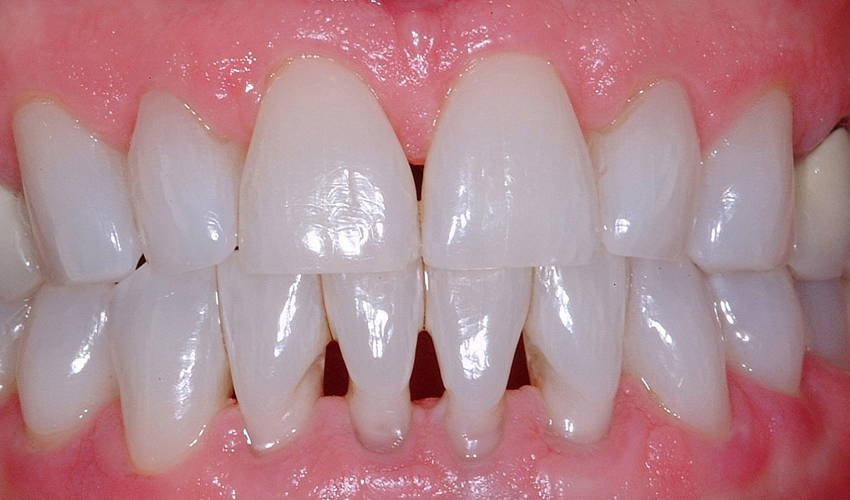
Gum recession is a condition in which the gum tissue moves away from its normal position, exposing part of the tooth root surface. It may affect a single tooth or multiple teeth.
When gum recession occurs, the teeth may appear longer than before, and the exposed root surfaces may become sensitive to hot and cold temperatures. Recession in the front teeth may also cause aesthetic concerns for some patients.
At Dentsmile Oral and Dental Health Clinic, when planning gum recession treatment in Üsküdar, we first identify the underlying cause of the recession. This is important because gum recession does not always develop for the same reason, and not every case requires gum graft surgery.
What Causes Gum Recession?
There is no single cause of gum recession. In many cases, several factors may contribute to its development.
One of the most common causes is brushing the teeth with an incorrect technique or applying excessive pressure. Long-term traumatic brushing may contribute to gum recession, particularly in people with thin gum tissue.
Periodontal diseases such as periodontitis, which affect the tissues supporting the teeth, may also lead to changes in the gum level and exposure of the root surfaces.
Other factors associated with gum recession may include:
Thin gum tissue
The position of the teeth within the jawbone
Crowding and certain orthodontic problems
Plaque and tartar accumulation
Repeated trauma to the gum tissue
Poorly adapted dental restorations
Smoking
For this reason, before beginning treatment, it is important to evaluate not only the area of recession but also the factors that may have contributed to its development.
How Can Gum Recession Be Recognized?
Gum recession is often first noticed when a patient sees that a tooth appears longer than before.
Because the exposed root surface is not covered by enamel, sensitivity to cold, hot, sweet, or acidic foods and beverages may develop.
In some patients, the difference in color between the tooth crown and the exposed root surface may also become noticeable.
If active periodontal disease accompanies the recession, additional symptoms such as bleeding, bad breath, gum inflammation, and, in advanced cases, tooth mobility may occur.
A loose tooth is not a normal consequence of simple gum recession. In such cases, the bone and periodontal tissues supporting the tooth should also be evaluated.
How Is Gum Recession Treated?
Treatment is determined according to the cause and severity of the recession.
Surgical treatment is not necessary for every case of gum recession. The first priority is to control the factors that may be causing the recession to progress.
If incorrect brushing habits are present, the patient is shown the appropriate brushing technique. If plaque and tartar have accumulated, professional dental cleaning is performed. When periodontal disease is present, this condition should be treated first.
In patients where sensitivity is the main concern, treatments aimed at reducing sensitivity of the exposed root surface may be considered.
In suitable cases where recession has progressed, a significant portion of the root surface is exposed, or aesthetic concerns are present, gum grafting and root coverage procedures may be considered.
The objective of treatment is not always to return the gum tissue completely to its original position. In some cases, the primary goal is to prevent further progression of the recession and maintain the health of the affected area.
Gum Grafting
A gum graft is a periodontal surgical procedure that may be used in suitable cases to increase the amount of soft tissue in an area affected by gum recession or to cover part of an exposed root surface.
The patient’s own oral tissue may be used for grafting, while different biomaterials may also be considered depending on the individual case.
However, it is not appropriate to guarantee complete coverage of the exposed root surface for every patient following gum graft surgery.
The achievable result depends on factors such as the type and depth of the recession, the bone and gum support between the teeth, the position of the tooth, and the characteristics of the existing tissues.
For this reason, the potential degree of root coverage should be evaluated individually before surgical treatment.
How Can the Progression of Gum Recession Be Prevented?
Proper daily oral hygiene is particularly important for patients with gum recession.
Brushing harder does not mean cleaning the teeth more effectively. The gum line should be cleaned with an appropriate toothbrush and correct brushing technique without causing unnecessary trauma to the gum tissues.
Cleaning between the teeth should also not be neglected. Dental floss or interdental brushes may be selected according to the patient’s tooth and gum structure.
Because smoking can negatively affect periodontal health, patients are advised to stop smoking.
Regular periodontal examinations are particularly important for patients who have previously been diagnosed with gum recession. These appointments allow the dentist to monitor whether the recession remains stable or continues to progress.
Gum Recession Treatment in Üsküdar
At Dentsmile Oral and Dental Health Clinic, before planning gum recession treatment in Üsküdar, we consider it important to identify the cause of the recession rather than focusing only on how much gum tissue has been lost.
Factors such as traumatic brushing, periodontal disease, tooth position, and gum tissue characteristics may require different treatment approaches.
For some patients, proper oral hygiene and regular periodontal monitoring may be sufficient, while in suitable cases surgical procedures such as gum grafting and root coverage may be considered.
Our fundamental approach is to preserve the existing healthy gum tissue whenever possible, control the factors contributing to the progression of recession, and, when necessary, create an individualized treatment plan to protect the exposed root surface.