
Tooth Extraction
Wisdom Tooth Extraction
Comprehensive information about Wisdom Tooth Extraction, treatment steps and FAQs — Dentsmile.
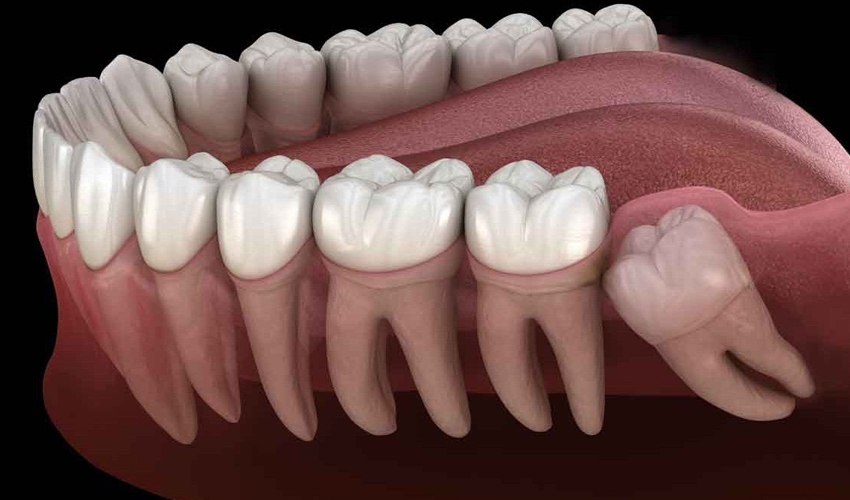
Wisdom teeth (third molars) are the third molar teeth located at the very back of the upper and lower jaws. Although they generally begin to erupt during young adulthood, the timing of eruption may vary from person to person. In some individuals, wisdom teeth erupt completely and into the correct position, while in others they may remain partially erupted, impacted, or positioned at different angles.
The presence of a wisdom tooth alone is not an indication for extraction. Wisdom teeth that have erupted into the correct position, have a healthy bite relationship with the opposing tooth, can be adequately cleaned, and do not cause problems in the surrounding tissues may be retained.
However, extraction may be considered when a wisdom tooth does not have sufficient space to erupt, causes recurrent infections, damages a neighboring tooth, or is associated with pathological changes in the surrounding tissues.
At Dentsmile Oral and Dental Health Clinic, when planning a wisdom tooth extraction in Üsküdar, we first evaluate the position and eruption status of the tooth, its root anatomy, and its relationship with the surrounding anatomical structures. Whether a simple or surgical extraction is required is determined based on this assessment.
Why Can Wisdom Teeth Cause Problems?
Because wisdom teeth are located at the very back of the jaw, some patients may not have sufficient space for these teeth to erupt completely.
A wisdom tooth may press against the second molar in front of it while attempting to erupt, develop at an abnormal angle, or emerge only partially into the mouth. These situations can lead to various problems.
Particularly around partially impacted wisdom teeth, areas that are difficult to clean may develop. The accumulation of food debris and bacteria in these areas can contribute to gum infections.
Whether a wisdom tooth is causing a problem should not be assessed solely on the presence or absence of pain. Certain problems may progress for a long time without causing obvious symptoms.
When Should a Wisdom Tooth Be Extracted?
It is not correct to assume that every wisdom tooth needs to be removed. The decision to extract should be based on a clinical examination and, when necessary, radiographic assessment.
Wisdom tooth extraction may be considered particularly in cases involving:
Recurrent pain and infection
Recurrent gum inflammation around a partially impacted tooth
Decay in the wisdom tooth that is not suitable for treatment
Contribution to decay or periodontal problems affecting the neighboring second molar
Damage to the root of an adjacent tooth
Cystic or other pathological changes around the tooth
A tooth that cannot be adequately cleaned because of its position and causes recurrent problems
The patient’s age, general health, position of the tooth, and potential risks associated with the surgical procedure should also be considered when making the decision to extract.
What Is an Impacted Wisdom Tooth?
If a wisdom tooth has completed its normal eruption period but has not fully emerged into the mouth, it may be considered impacted or partially impacted.
The tooth may remain completely within the bone, or part of it may remain covered by bone or gum tissue.
Impacted wisdom teeth may be positioned vertically, horizontally, or at various angles. The angle of the tooth and its depth within the bone can influence the surgical technique required.
Some completely impacted wisdom teeth that show no signs of disease may be monitored through regular follow-up examinations.
Partially Impacted Wisdom Teeth and Gum Infection
When only part of a wisdom tooth has erupted into the mouth, an area may develop beneath the gum tissue partially covering the tooth where bacteria can easily accumulate.
An infection developing in this area is known as pericoronitis.
Pericoronitis may cause pain at the back of the mouth, gum swelling, an unpleasant taste, bad breath, tenderness while chewing, and, in some patients, difficulty opening the mouth.
The long-term condition of the wisdom tooth should be evaluated in patients who experience recurrent episodes of pericoronitis.
When an active infection is present, the type of treatment required and the timing of extraction are determined according to the patient’s clinical condition.
Is an X-Ray Taken Before Wisdom Tooth Extraction?
Radiographic assessment plays an important role in planning wisdom tooth extraction.
A panoramic X-ray can be used to evaluate:
The eruption angle of the tooth
Its position within the bone
The number and shape of the roots
Its relationship with the neighboring second molar
The surrounding bone tissue
Its relationship with the nerve canal in the lower jaw
Its proximity to the maxillary sinus in the upper jaw
The same imaging method is not required for every patient. The appropriate imaging approach is determined according to the clinical examination and existing findings.
Is 3D Tomography Necessary for Wisdom Tooth Extraction?
3D dental tomography (CBCT) is not required for every wisdom tooth extraction.
Particularly when a close relationship is suspected between the roots of an impacted lower wisdom tooth and the inferior alveolar nerve canal, a two-dimensional panoramic image may not provide sufficient information.
In selected cases, three-dimensional tomography can help provide a more detailed assessment of the anatomical relationship between the tooth roots and the nerve canal.
For upper wisdom teeth, the relationship with the maxillary sinus may also be evaluated when necessary.
The objective is not to request tomography for every patient, but to identify cases in which advanced imaging can provide additional information that is relevant to surgical planning.
How Is Wisdom Tooth Extraction Performed?
If a wisdom tooth has fully erupted and is positioned appropriately in the mouth, it may be removed using a simple tooth extraction technique in some cases.
If part or all of the tooth remains within the bone, surgical extraction may be necessary.
During surgical wisdom tooth extraction, local anesthesia is administered and controlled access to the tooth is established. When necessary, the gum tissue is opened and a limited amount of the bone covering the tooth is removed.
If attempting to remove the tooth in one piece would cause unnecessary trauma to the surrounding tissues, the tooth may be carefully divided into sections and removed in separate pieces.
After the tooth has been removed, the surgical area is examined and cleaned when necessary, and sutures may be placed when appropriate.
Lower Wisdom Tooth Extraction
When evaluating lower wisdom teeth, the relationship between the roots of the tooth and the nerve canal running through the lower jaw is particularly important.
This canal contains nerve structures associated with sensation in the lower lip and chin region.
When the roots of a wisdom tooth are very close to the nerve canal, the potential risks should be evaluated before surgery.
Three-dimensional imaging may be requested in selected cases where a close relationship with the nerve is suspected. In certain situations where the risk of nerve injury is considered high, alternative approaches such as coronectomy, in which only the crown of the tooth is removed while the roots are intentionally left in place, may be considered.
This approach is not suitable for every patient, and the decision should be made after a detailed assessment.
Upper Wisdom Tooth Extraction
Upper wisdom teeth have different anatomical characteristics from lower wisdom teeth.
One of the important structures that should be considered in this region is the maxillary sinus.
When the roots of the tooth are located close to the floor of the sinus, the extraction should be planned accordingly.
Some upper wisdom teeth can be removed using a simple extraction technique, while impacted or abnormally positioned teeth may require a surgical approach.
Is Wisdom Tooth Extraction Painful?
Wisdom tooth extraction is generally performed under local anesthesia.
Once adequate anesthesia has been achieved, sharp pain is not expected during the procedure. The patient may feel pressure, movement, or vibration during the extraction.
After the anesthesia wears off, pain and tenderness may occur depending on the difficulty of the extraction.
Particularly after the surgical removal of an impacted wisdom tooth, tenderness and swelling may be more pronounced than after a simple extraction.
Swelling After Wisdom Tooth Extraction
A certain amount of swelling can be expected after surgical wisdom tooth extraction.
The degree of swelling varies according to the position of the tooth within the bone, the extent of the surgical procedure, and the patient’s individual healing response.
When considered appropriate by the dentist, intermittent external cold application may be recommended during the early postoperative period.
Swelling should gradually decrease over time. Clinical evaluation is required if swelling continues to increase or is accompanied by fever, an unpleasant taste or odor, significant difficulty swallowing, or deterioration in general health.
What Should You Do After Wisdom Tooth Extraction?
The first few hours after extraction are important for wound healing.
In particular:
Bite gently on the gauze placed by the dentist for the recommended period.
Avoid vigorous mouth rinsing during the first day.
Avoid frequent or forceful spitting.
Do not touch or disturb the extraction site with your tongue or fingers.
Avoid very hot foods and beverages.
Avoid smoking and tobacco products.
Avoid using straws or other activities that create suction inside the mouth.
If medications have been prescribed by your dentist, use them according to the instructions provided.
Protecting the blood clot that forms within the extraction socket is an important part of normal healing.
Nutrition After Wisdom Tooth Extraction
Care should be taken when eating until the effects of anesthesia have completely worn off. While the mouth is still numb, the lips, cheeks, or tongue may be accidentally bitten.
Soft and lukewarm foods may be more appropriate during the initial recovery period.
Very hot, hard, sharp, or irritating foods should generally be avoided, and chewing on the opposite side of the mouth may be recommended whenever possible.
As healing progresses, patients can gradually return to their normal diet.
Healing After Wisdom Tooth Extraction
Immediately after extraction, a blood clot forms within the socket where the tooth was located. This clot represents the initial stage of wound healing.
The soft tissues then begin to heal. Remodeling of the bone within the extraction socket takes longer.
If sutures were placed during surgical extraction, they may dissolve on their own or may need to be removed during a follow-up appointment, depending on the type of suture material used.
A certain degree of pain and swelling may be normal during the first few days. However, symptoms should generally decrease over time.
Dry Socket After Wisdom Tooth Extraction
If the blood clot within the extraction site fails to form properly or is lost prematurely, alveolar osteitis (dry socket) may develop.
Dry socket may present as severe pain that begins or becomes progressively worse within the first few days after extraction. The pain may radiate toward the ear, jaw, or surrounding tissues.
Smoking and behaviors that disrupt the blood clot within the extraction site may increase the risk.
If this type of pain develops, patients should contact their dentist rather than applying medications or other substances directly into the extraction socket on their own.
Wisdom Tooth Extraction in Üsküdar
At Dentsmile Oral and Dental Health Clinic, when patients visit us for a wisdom tooth extraction in Üsküdar, the first question we evaluate is whether the wisdom tooth genuinely needs to be removed.
Wisdom teeth that have erupted into a healthy position, can be adequately cleaned, and do not cause problems in the surrounding tissues do not need to be extracted simply because they are wisdom teeth.
When extraction is necessary, the position of the tooth, root anatomy, relationship with neighboring teeth, and proximity to important anatomical structures such as the nerve canal or maxillary sinus are evaluated. When required, 3D dental tomography may be used to provide more detailed information for surgical planning.
Our fundamental approach to wisdom tooth extraction in Üsküdar is to avoid unnecessary extractions, determine the appropriate surgical technique when extraction is necessary, and perform treatment in a controlled manner while preserving the surrounding bone and soft tissues as much as possible.