
Blog
What Are Wisdom Teeth? Wisdom Tooth Treatment in Üsküdar
What Are Wisdom Teeth? Wisdom Tooth Treatment in Üsküdar
Published:
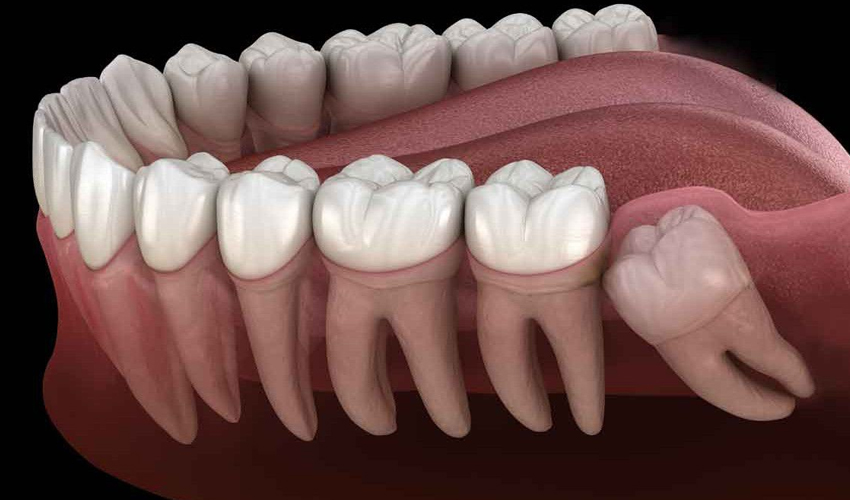
Wisdom teeth (third molars) are the teeth located at the very back of the upper and lower jaws. Also known as third molars, these teeth generally begin to erupt during young adulthood. However, the timing of eruption varies from person to person. In some individuals, they may erupt later or remain partially or completely impacted. Some people may also never develop one or more wisdom teeth.
When there is insufficient space in the jaw, a wisdom tooth may not erupt completely. Part of the tooth may be visible in the mouth while the remaining portion stays beneath the gum or bone. Some wisdom teeth may remain completely impacted within the gum or jawbone.
At Dentsmile Oral and Dental Health Clinic, during a wisdom tooth evaluation in Üsküdar, we do not consider only whether the tooth is impacted. Its position, relationship with neighboring teeth, surrounding tissues, and any problems it may be causing are evaluated together.
Do Wisdom Teeth Always Need to Be Removed?
Not every wisdom tooth needs to be removed.
Wisdom teeth that have erupted normally, have a proper bite relationship with the opposing tooth, can be cleaned effectively, and do not cause problems in the surrounding tissues may simply be monitored.
Similarly, being impacted does not necessarily mean that a wisdom tooth must be removed. Some impacted teeth that do not cause disease or other problems may be monitored through regular clinical examinations and radiographic imaging when necessary.
The decision to remove a wisdom tooth should be based on the patient’s age, the position of the tooth, existing or potential problems associated with it, and the possible risks of the surgical procedure.
When Should a Wisdom Tooth Be Removed?
Wisdom tooth removal is generally considered when the tooth itself or the surrounding tissues develop a problem.
One of the most common conditions is pericoronitis, an inflammation of the gum tissue surrounding a partially erupted wisdom tooth. This may cause pain, swelling, an unpleasant taste, and, in some cases, difficulty opening the mouth.
Other reasons for wisdom tooth removal may include:
Decay in the wisdom tooth that cannot be treated
Decay or periodontal problems affecting the neighboring tooth
Recurrent gum infections
Cysts or other pathological conditions around the tooth
Partially impacted teeth that cannot be cleaned effectively and repeatedly cause problems
Certain orthodontic or surgical treatment plans
Rather than routinely removing all wisdom teeth simply because they “may cause problems in the future,” each tooth should be evaluated individually.
How Is an Impacted Wisdom Tooth Evaluated?
Radiographic examination is important in addition to a clinical examination when evaluating impacted wisdom teeth.
The roots of lower wisdom teeth, in particular, may be located close to the inferior alveolar nerve, which runs through the lower jaw and is associated with sensation in the lower lip and chin area.
If a panoramic X-ray suggests that the tooth roots are in close proximity to the nerve canal, 3D dental tomography (CBCT) may be used in some patients for a more detailed evaluation.
This assessment helps with surgical planning and allows potential risks to be evaluated individually for each patient.
How Is a Wisdom Tooth Removed?
A fully erupted and easily accessible wisdom tooth may, in some cases, be removed in a similar way to a routine tooth extraction.
When the tooth is partially or completely located within the jawbone, surgical wisdom tooth removal may be necessary.
The procedure is generally performed under local anesthesia. When necessary, the gum tissue is carefully opened, a limited amount of bone covering the tooth may be removed, and the tooth may be divided into smaller sections to allow more controlled removal.
After the tooth has been removed, the area is cleaned and sutures may be placed when necessary.
The difficulty of the extraction does not depend solely on whether the tooth is impacted. The angle of the tooth, root shape, depth within the bone, relationship with the nerve canal, the patient’s mouth opening, and surrounding anatomical structures may all influence surgical planning.
What Should You Do After Wisdom Tooth Removal?
Protecting the blood clot that forms in the extraction site is an important part of the healing process.
The gauze placed by the dentist should be gently bitten for the recommended period. During the first few hours, vigorous rinsing, frequent spitting, and touching the extraction site with the tongue or other objects should be avoided.
During the first day, it may be advisable to avoid very hot foods and drinks and choose softer foods instead.
Smoking can negatively affect healing and increase the risk of alveolar osteitis (dry socket). For this reason, avoiding smoking is particularly important during the early healing period.
After surgical extractions, intermittent cold application from outside the mouth may be recommended by the dentist. Ice should not be applied directly to the skin.
Painkillers and other medications should be used according to the dentist’s recommendations rather than the patient’s own preference.
When Should You Contact a Dentist After Wisdom Tooth Removal?
Some pain, swelling, and mild bleeding or oozing may occur after wisdom tooth removal. Swelling may become more noticeable during the first few days, particularly following surgical extraction.
However, the dentist should be contacted if any of the following occur:
Heavy or uncontrolled bleeding
Severe pain that continues to increase
Pain that becomes significantly worse several days after the extraction
Fever
Discharge accompanied by an unpleasant smell or taste
Increasing swelling
Difficulty swallowing or breathing
Severe pain that begins or becomes significantly worse a few days after extraction should be evaluated for possible alveolar osteitis (dry socket).
Wisdom Tooth Treatment and Removal in Üsküdar
At Dentsmile Oral and Dental Health Clinic, before performing wisdom tooth removal in Üsküdar, we first determine whether the tooth actually needs to be removed.
For fully erupted, partially impacted, or completely impacted wisdom teeth, the treatment decision is not based solely on the appearance of the tooth. Its relationship with neighboring teeth, the presence of infection, its position within the jawbone, and, particularly in the lower jaw, its proximity to the nerve canal are evaluated together.
When necessary, 3D dental tomography may be used in addition to panoramic X-rays to support detailed surgical planning.
Our primary approach is to avoid unnecessary removal of healthy wisdom teeth that are not causing problems and, when extraction is necessary, to carefully evaluate the anatomical position of the tooth and plan the procedure in the most controlled manner possible.